The last time I posted anything was at the beginning of 2008, or was it the end of 2007? Anyway, all I can say is that 2008 was a wasted year in many ways than one. It was the worst year in many Zimbabweans' lives. I write this because I am taking a painful yet necessary decision to leave the country of my birth for a foreign land.
My boys and I will pack a few items and the clothes on our backs to leave for peaceful Botswana where my wife has found a job. The reason we are not taking anything with us is that this is an opportunity to start a new life. We don't want to take the bitter memories with us, we just want to turn our backs on a nighmare we thought would never end.
Anyone, let alone children should not be exposed to the type of existence we were forced to endure. We can point fingers at the corrupt, selfish and vicious establishment, but the ultimate decision remains with us. we got the government that we deserved because through the years, the struggle that we tried to illuminate was being stiffled by a spetacular yet debilitating show of apathy and abject fear that has brought such a wonderful country to its knees.
Being away will give me time to reflect and resume those pastimes that remain so close to my heart. Writing and teaching will help me to regain the sanity that I almost lost. I will use my experiences in Zimbabwe to motivate others, to preach the gospel of tolerance, peserverence and the respect for human dignity, to say to those who are yet to see that this is not a path they wuld like to take.
To those who remain, my prayers are with you because for you to have survived this far is sure indication that God has you under the wings of his angels. Things will definately get better...
Friday, January 09, 2009


Thursday, December 20, 2007
If this does not blow your mind, then...
The Rise of The Phoenix: An Evolving Global Humanity
Bruce H. Lipton, PhD © 2007
This artcle is featured in Mystic Pop’s Nov/Dec issue: Mystic Pop
It is obvious, even to the most Prozaced-out individual, that today’s global crises impacting the environment, health, economics and social stability are threatening the survival of human civilization. Suddenly, the old cartoon of some bearded weirdo carrying a placard reading, “The World is Ending!” doesn’t seem that funny. Media and government continuously focus our attention on the darkness of impending crises, however, recent advances in physics and biology offer a significantly different and amazingly hopeful alternative for these very same symptoms.
New scientific insights suggest the evolution of human civilization resembles the recurring fate of the Phoenix, a sacred firebird revered in ancient Egyptian mythology. At the end of its lifecycle the Phoenix builds a nest of cinnamon twigs that it then ignites; both nest and bird burn fiercely and are reduced to ashes. From the ashes arises a new and greater Phoenix.
A renaissance in scientific awareness is rewriting our fundamental perceptions about life and evolution. Weaving together the elements of the new physics (quantum mechanics), the new biology (epigenetics) and the new math (fractal geometry) reveal that today’s crises are not signifying an end to civilization, rather they are portents of an astounding new beginning, the emergence of a new Phoenix—global humanity.
The character of all cultures is based upon a set of fundamental beliefs referred to as the basal paradigm. Significant changes in societal beliefs inevitably lead to a disintegration of the prevailing culture and the emergence of a new one. Western Civilization evolved through a sequence of such cultural upheavals; transitioning from animism (aboriginal cultures such as Native Americans), to polytheism (e.g., Egyptians, Romans and Greeks), to monotheism (Judeo-Christian and Islamic cultures) and to the current culture of scientific materialism (based upon the “truths” of Modern Science). Each civilization is defined by its own unique basal paradigm.
Currently civilization is poised for another cultural upheaval. Recent revisions in science are profoundly revising four flawed “truths” upon which our culture is built. I refer to these old beliefs as the Four Myth-Perceptions of the Apocalypse, misperceptions that are contributing to the demise of our civilization.
Myth-Perception 1 – Biology is controlled by matter-based Newtonian mechanics [Revision- Biology is controlled by invisible Quantum mechanical forces]
Myth-Perception 2 – Genes control life [Revision- The new science of epigenetics reveals that environment controls genes]
Myth-Perception 3 – “Survival of the fittest” drives evolution [Revision- Cooperation drives evolution]
Myth-Perception 4 – Evolution is a Random Process [Revision- Organisms evolve to conform to environment]
When these fundamentally new scientific insights replace our currently limiting cultural myths, the ashes of our current civilization will give rise to a more magnificent version of the human Phoenix. The following brief discussion focuses upon new scientific insights that dispel the myth of genes, the limiting belief that genes control biology.
Recently, results of the Human Genome Project have shattered one of Science’s fundamental core beliefs, the concept of genetic determinism. We have been led to believe that our genes determine the character of our lives, yet new research surprisingly reveals that it is the character of our lives that controls our genes. Rather than being victims of our heredity, we are actually masters of our genome.
The new science of epigenetics illuminates how our mind (perceptions, attitudes and emotions) shapes biology and behavior. Throughout infancy, our primary perceptions of life were programmed with cultural beliefs. Since perceptions shape behavior and gene activity, cultural beliefs become biology. For example, are we violent because we are genetically disposed to being violent? Or, are we violent because we believe we are genetically disposed to being violent? The new science reveals either cause could be right.
Cell biology is important because the human body is actually a community of upwards to fifty trillion cells. The physical and behavioral traits of cells are derived from over 150,000 different protein building blocks whose structures are programmed in our genes. One of biology’s most hallowed beliefs, codified as the Central Dogma, stipulates that information in biology flows in only one direction: from DNA to RNA to protein. Consequently, the Central Dogma provides for the notion of genetic determinism, the belief that genes “control” the character of life. Textbooks and mass media are still informing the public that genes control their lives, regardless of the fact that most biologists are now aware that this simplified assumption is not valid.
Between the 1970’s and 80’s, as a tenured faculty member of the University of Wisconsin’s School of Medicine, I was dutifully programming the Central Dogma into the malleable minds of my medical students. However, my university work was primarily concerned with research on muscular dystrophy employing cultures of cloned stem cells. Cloned cells are created by inoculating a single stem cell into a culture dish and allowing it to divide many times, producing thousands of genetically identical cells.
To my surprise, I found that by changing some of the components in my tissue culture dishes or by changing the composition of the incubator’s atmospheric gases, I could profoundly alter the fate of my cultured cells. For example, I would split my stem cell culture into three tissue culture dishes, each exposed to different environmental condition. In one dish the cells formed muscle, in another they formed bone and the remaining dish the cells formed fat (adipose). Since my culture were seeded with genetically identical stem cells, it was clear that the differentiated fate of the cell was under the control of the culture environment and NOT the genes.
My peers considered my studies “heretical” since they challenged the Dogma of gene control. Heresies, dogmas…my first realization that modern science was somewhat of a religion! These studies, demonstrating that cells were not “controlled” by genes, emphasized the power of nurture over nature in influencing our lives.
Though research has established that genes don’t control life, textbooks and mass media still refer to the gene-containing nucleus as the cell’s brain, fostering the outdated belief that genes control biology. Twenty years ago, I had recognized that the nucleus was not the brain, it was functionally equivalent to the cell’s gonads, strictly involved with cell reproduction. Additionally, experiments in which the cell’s nucleus is removed, showed that cells can live and express complex behaviors for two or more months without having any genes.
Spurred on by challenges from disbelieving peers, I refocused my research to identify the mechanisms by which environmental information controlled behavior and genetics. Eventually my quest revealed the cell’s “skin” (the cell membrane) was responsible for reading and responding to environmental conditions. “Switches” in the membrane were comprised of protein receptors, the cell’s equivalents of eyes, ears and nose, that read environmental signals, and protein effectors that activated cell functions or the reading of genes. Membrane “switches” enable cells to dynamically adapt their genes and behavior to conform to environmental demands.
Membrane “switches” are molecular units of perception used in regulating the cell’s biology. The membrane, more accurately, the “mem-Brain,” represents the cell’s equivalent of a brain. Understanding membrane structure and function would be key to understanding the nature of life. In 1985, I was reviewing the molecular architecture and behavior of the cell membrane as an environmental information processor. In outline form, I jotted down a series of descriptive phrases using terms I’d hadn’t used before. I sat back and reviewed what I had just written: “The cell membrane is a liquid crystal, semiconductor with gates and channels.”
As a cellular biologist, I’d never used these particular phrases, yet they sounded very familiar. Where had I heard them? On the corner of my desk, I noticed my first computer, a smiley-faced Macintosh, and next to it a book I had been reading entitled Understanding Your Microprocessor. On page three in the book’s Introduction, was the definition of a computer chip, “…a crystal semiconductor with gates and channels.”
I froze. The next sequence of thoughts happened probably in milliseconds—but to me, it seemed like hours. First I thought, “What a coincidence…the cell membrane and a computer chip share the same definition!” Then a few more hour-long milliseconds lapsed and it hit me, “This was not a simple coincidence! The molecular architecture and behavior of a computer chip is essentially identical to a cell membrane!” The membrane is not analogous to a chip; the membrane is homologous to a chip. Meaning, the membrane is not “like a chip,” the membrane IS a chip.
The cell membrane is a carbon-based, molecular equivalent of a silicon-based computer chip. Every cell is a programmable chip, with a hard drive (the nucleus) containing software (genes). As with conventional silicon based computers, cellular data is entered via a keyboard—comprised of thousands of different membrane protein receptors keyed to different environmental signals. Ambient environmental signals are converted into cell behavior by the membrane’s effector proteins.
Around ten years ago, the new science of epigenetics evolved to describe the molecular mechanisms by which environmental signals dynamically control the activity of genes. Most importantly, epigenetic mechanisms can generate over 30,000 different protein variations from each gene blueprint. In contrast to the belief that genes are hardwired programs, epigenetics reveal that gene programs are rewriteable enabling cells to adapt to dynamic environments.
Epigenetic science demonstrates that the cell’s nucleus is a read-write hard disk, wherein gene software is programmed by the membrane’s response to environmental perceptions.
Since cells respond to environment al cues, why are we not human “clones” since we are exposed to the same environment? The answer, no two people are biologically the same; your body would reject a tissue or organ graft from anyone else by recognizing the foreign cells as not being self. Likewise, your cells would be rejected by any other recipient for the same reason.
Where is an individual’s identity to be found? The cells in each body have a unique set of membrane proteins on their outer surface. Medicine identifies a subset of the these receptors as self-receptors, literally, “receivers of self.” When self-receptors are removed from a cell it becomes a generic cell, transplantable into anyone without being rejected. Transferring one person’s set of self-receptors on to another’s cell would also transfer “ownership” of that cell.
Where does our identity come from? Apparently, it is a unique “signal” from the field read by our self-receptors. Importantly, this communication is a two-way street; signals are not just coming into the cells, since our experiential awareness is sent back out to the field and changes the source! The invisible moving forces described by quantum biophysics that activate the self-receptors are the same invisible moving forces acknowledged as spirit.
Interestingly, the signals defining self are still in the environment even if the cells die and are not here to read them. Even more interesting, a new child could come into being displaying an “old” set of self-receptors—the “old” soul would be back on air…reincarnation!
For a guy who didn’t believe in spirituality, understanding the nature of the membrane rocked my world It was a transformational moment for me to discover that I am NOT a biochemical robot, but a spiritually controlled community of programmable cells who is now collaborating with other cell “communities” to create the new human Phoenix.
For more information on this and other topics, visit: www.brucelipton.com
Author reserves first rights
Bruce H. Lipton, Ph.D., bestselling author of The Biology of Belief, is a cellular biologist and former Associate Professor at the University of Wisconsin’s School of Medicine.† His pioneering research on cloned stem cells at Wisconsin presaged the revolutionary field of epigenetics, the new science of how environment and perception control genes. His later research at Stanford University’s School of Medicine revealed the nature of the biochemical pathways that bridge the mind-body duality. His book, The Biology of Belief: Unleashing the Power of Consciousness Matter and Miracles, an LA Times Bestseller won Best Science Book of the Year by USA Book News in 2006.† He has been a guest speaker on numerous radio and television programs, and a sought after keynote presenter for national organizations. (www.brucelipton.com)
Bruce H. Lipton, PhD © 2007
This artcle is featured in Mystic Pop’s Nov/Dec issue: Mystic Pop
It is obvious, even to the most Prozaced-out individual, that today’s global crises impacting the environment, health, economics and social stability are threatening the survival of human civilization. Suddenly, the old cartoon of some bearded weirdo carrying a placard reading, “The World is Ending!” doesn’t seem that funny. Media and government continuously focus our attention on the darkness of impending crises, however, recent advances in physics and biology offer a significantly different and amazingly hopeful alternative for these very same symptoms.
New scientific insights suggest the evolution of human civilization resembles the recurring fate of the Phoenix, a sacred firebird revered in ancient Egyptian mythology. At the end of its lifecycle the Phoenix builds a nest of cinnamon twigs that it then ignites; both nest and bird burn fiercely and are reduced to ashes. From the ashes arises a new and greater Phoenix.
A renaissance in scientific awareness is rewriting our fundamental perceptions about life and evolution. Weaving together the elements of the new physics (quantum mechanics), the new biology (epigenetics) and the new math (fractal geometry) reveal that today’s crises are not signifying an end to civilization, rather they are portents of an astounding new beginning, the emergence of a new Phoenix—global humanity.
The character of all cultures is based upon a set of fundamental beliefs referred to as the basal paradigm. Significant changes in societal beliefs inevitably lead to a disintegration of the prevailing culture and the emergence of a new one. Western Civilization evolved through a sequence of such cultural upheavals; transitioning from animism (aboriginal cultures such as Native Americans), to polytheism (e.g., Egyptians, Romans and Greeks), to monotheism (Judeo-Christian and Islamic cultures) and to the current culture of scientific materialism (based upon the “truths” of Modern Science). Each civilization is defined by its own unique basal paradigm.
Currently civilization is poised for another cultural upheaval. Recent revisions in science are profoundly revising four flawed “truths” upon which our culture is built. I refer to these old beliefs as the Four Myth-Perceptions of the Apocalypse, misperceptions that are contributing to the demise of our civilization.
Myth-Perception 1 – Biology is controlled by matter-based Newtonian mechanics [Revision- Biology is controlled by invisible Quantum mechanical forces]
Myth-Perception 2 – Genes control life [Revision- The new science of epigenetics reveals that environment controls genes]
Myth-Perception 3 – “Survival of the fittest” drives evolution [Revision- Cooperation drives evolution]
Myth-Perception 4 – Evolution is a Random Process [Revision- Organisms evolve to conform to environment]
When these fundamentally new scientific insights replace our currently limiting cultural myths, the ashes of our current civilization will give rise to a more magnificent version of the human Phoenix. The following brief discussion focuses upon new scientific insights that dispel the myth of genes, the limiting belief that genes control biology.
Recently, results of the Human Genome Project have shattered one of Science’s fundamental core beliefs, the concept of genetic determinism. We have been led to believe that our genes determine the character of our lives, yet new research surprisingly reveals that it is the character of our lives that controls our genes. Rather than being victims of our heredity, we are actually masters of our genome.
The new science of epigenetics illuminates how our mind (perceptions, attitudes and emotions) shapes biology and behavior. Throughout infancy, our primary perceptions of life were programmed with cultural beliefs. Since perceptions shape behavior and gene activity, cultural beliefs become biology. For example, are we violent because we are genetically disposed to being violent? Or, are we violent because we believe we are genetically disposed to being violent? The new science reveals either cause could be right.
Cell biology is important because the human body is actually a community of upwards to fifty trillion cells. The physical and behavioral traits of cells are derived from over 150,000 different protein building blocks whose structures are programmed in our genes. One of biology’s most hallowed beliefs, codified as the Central Dogma, stipulates that information in biology flows in only one direction: from DNA to RNA to protein. Consequently, the Central Dogma provides for the notion of genetic determinism, the belief that genes “control” the character of life. Textbooks and mass media are still informing the public that genes control their lives, regardless of the fact that most biologists are now aware that this simplified assumption is not valid.
Between the 1970’s and 80’s, as a tenured faculty member of the University of Wisconsin’s School of Medicine, I was dutifully programming the Central Dogma into the malleable minds of my medical students. However, my university work was primarily concerned with research on muscular dystrophy employing cultures of cloned stem cells. Cloned cells are created by inoculating a single stem cell into a culture dish and allowing it to divide many times, producing thousands of genetically identical cells.
To my surprise, I found that by changing some of the components in my tissue culture dishes or by changing the composition of the incubator’s atmospheric gases, I could profoundly alter the fate of my cultured cells. For example, I would split my stem cell culture into three tissue culture dishes, each exposed to different environmental condition. In one dish the cells formed muscle, in another they formed bone and the remaining dish the cells formed fat (adipose). Since my culture were seeded with genetically identical stem cells, it was clear that the differentiated fate of the cell was under the control of the culture environment and NOT the genes.
My peers considered my studies “heretical” since they challenged the Dogma of gene control. Heresies, dogmas…my first realization that modern science was somewhat of a religion! These studies, demonstrating that cells were not “controlled” by genes, emphasized the power of nurture over nature in influencing our lives.
Though research has established that genes don’t control life, textbooks and mass media still refer to the gene-containing nucleus as the cell’s brain, fostering the outdated belief that genes control biology. Twenty years ago, I had recognized that the nucleus was not the brain, it was functionally equivalent to the cell’s gonads, strictly involved with cell reproduction. Additionally, experiments in which the cell’s nucleus is removed, showed that cells can live and express complex behaviors for two or more months without having any genes.
Spurred on by challenges from disbelieving peers, I refocused my research to identify the mechanisms by which environmental information controlled behavior and genetics. Eventually my quest revealed the cell’s “skin” (the cell membrane) was responsible for reading and responding to environmental conditions. “Switches” in the membrane were comprised of protein receptors, the cell’s equivalents of eyes, ears and nose, that read environmental signals, and protein effectors that activated cell functions or the reading of genes. Membrane “switches” enable cells to dynamically adapt their genes and behavior to conform to environmental demands.
Membrane “switches” are molecular units of perception used in regulating the cell’s biology. The membrane, more accurately, the “mem-Brain,” represents the cell’s equivalent of a brain. Understanding membrane structure and function would be key to understanding the nature of life. In 1985, I was reviewing the molecular architecture and behavior of the cell membrane as an environmental information processor. In outline form, I jotted down a series of descriptive phrases using terms I’d hadn’t used before. I sat back and reviewed what I had just written: “The cell membrane is a liquid crystal, semiconductor with gates and channels.”
As a cellular biologist, I’d never used these particular phrases, yet they sounded very familiar. Where had I heard them? On the corner of my desk, I noticed my first computer, a smiley-faced Macintosh, and next to it a book I had been reading entitled Understanding Your Microprocessor. On page three in the book’s Introduction, was the definition of a computer chip, “…a crystal semiconductor with gates and channels.”
I froze. The next sequence of thoughts happened probably in milliseconds—but to me, it seemed like hours. First I thought, “What a coincidence…the cell membrane and a computer chip share the same definition!” Then a few more hour-long milliseconds lapsed and it hit me, “This was not a simple coincidence! The molecular architecture and behavior of a computer chip is essentially identical to a cell membrane!” The membrane is not analogous to a chip; the membrane is homologous to a chip. Meaning, the membrane is not “like a chip,” the membrane IS a chip.
The cell membrane is a carbon-based, molecular equivalent of a silicon-based computer chip. Every cell is a programmable chip, with a hard drive (the nucleus) containing software (genes). As with conventional silicon based computers, cellular data is entered via a keyboard—comprised of thousands of different membrane protein receptors keyed to different environmental signals. Ambient environmental signals are converted into cell behavior by the membrane’s effector proteins.
Around ten years ago, the new science of epigenetics evolved to describe the molecular mechanisms by which environmental signals dynamically control the activity of genes. Most importantly, epigenetic mechanisms can generate over 30,000 different protein variations from each gene blueprint. In contrast to the belief that genes are hardwired programs, epigenetics reveal that gene programs are rewriteable enabling cells to adapt to dynamic environments.
Epigenetic science demonstrates that the cell’s nucleus is a read-write hard disk, wherein gene software is programmed by the membrane’s response to environmental perceptions.
Since cells respond to environment al cues, why are we not human “clones” since we are exposed to the same environment? The answer, no two people are biologically the same; your body would reject a tissue or organ graft from anyone else by recognizing the foreign cells as not being self. Likewise, your cells would be rejected by any other recipient for the same reason.
Where is an individual’s identity to be found? The cells in each body have a unique set of membrane proteins on their outer surface. Medicine identifies a subset of the these receptors as self-receptors, literally, “receivers of self.” When self-receptors are removed from a cell it becomes a generic cell, transplantable into anyone without being rejected. Transferring one person’s set of self-receptors on to another’s cell would also transfer “ownership” of that cell.
Where does our identity come from? Apparently, it is a unique “signal” from the field read by our self-receptors. Importantly, this communication is a two-way street; signals are not just coming into the cells, since our experiential awareness is sent back out to the field and changes the source! The invisible moving forces described by quantum biophysics that activate the self-receptors are the same invisible moving forces acknowledged as spirit.
Interestingly, the signals defining self are still in the environment even if the cells die and are not here to read them. Even more interesting, a new child could come into being displaying an “old” set of self-receptors—the “old” soul would be back on air…reincarnation!
For a guy who didn’t believe in spirituality, understanding the nature of the membrane rocked my world It was a transformational moment for me to discover that I am NOT a biochemical robot, but a spiritually controlled community of programmable cells who is now collaborating with other cell “communities” to create the new human Phoenix.
For more information on this and other topics, visit: www.brucelipton.com
Author reserves first rights
Bruce H. Lipton, Ph.D., bestselling author of The Biology of Belief, is a cellular biologist and former Associate Professor at the University of Wisconsin’s School of Medicine.† His pioneering research on cloned stem cells at Wisconsin presaged the revolutionary field of epigenetics, the new science of how environment and perception control genes. His later research at Stanford University’s School of Medicine revealed the nature of the biochemical pathways that bridge the mind-body duality. His book, The Biology of Belief: Unleashing the Power of Consciousness Matter and Miracles, an LA Times Bestseller won Best Science Book of the Year by USA Book News in 2006.† He has been a guest speaker on numerous radio and television programs, and a sought after keynote presenter for national organizations. (www.brucelipton.com)
Friday, November 16, 2007
Hard times never kill
Those of you who know what a ‘Ndebele’ bicycle looks like will identify with this. It is a statement in art and finesse, a bike that is elaborately decorated and endowed with some of the creature comforts found in a car, such as a radio, rear view mirrors and a horn among other things such as the mandatory ‘itshoba’ (made from the tail of some poor creature) and a plethora of reflective disks and other paraphernalia. Only a photograph of this contraption would do justice to ant fitting description.
One such work of art belonged to Siziba of Manxeleni who used to work for a clothing company in Donnington Industrial Sites. Every morning on his way to work, he would jump on his machine, a 3 speed Humber, and race the ZUPCO buses to work. It was such a spectacle, with Siziba, a Dobbs hat firmly perched on his head riding as if there was no tomorrow to the cat whistles of passengers and pedestrians alike.
Once every three months, Siziba would make the Great Trek to Manxeleni about 40 kilometres away using, you guessed it, his bike. I am sure that the bicycle was his prized possession, more like a car to him and the community there must have been equally proud. You see, those were the days when all we blacks could afford in terms of transportation was a bicycle.
What caught my attention then was a sign that he fixed to the mudguard of his ‘mtshina.’ It read, ‘Hard times never kill.’ I am not sure whether he understood the meaning of those words, but I can tell you this, I never realised the currency of that expression until now. In present day Zimbabwe we might have hit rocked bottom and started to dig, yet somehow we survive. Hard times never kill, now I know.
Environmental disaster
Water, now that is a very scarce resource in Bulawayo nowadays. There is no need for us to overemphasise its importance in our day to day lives. We require water for drinking, cooking, doing the laundry and of course, bathing. However, due to the shortage, people have decided to forgo one or the other of the important functions.
Some of us have stopped bathing. Now this suspension of a very hygienic activity is presenting a lot of problems in terms of socialisation. Let me go back into history to fix my bearings. When we were at boarding school all those years ago when dinosaurs used to roam the earth, bathing was optional particularly during winter.
It was the rule rather that the exception that people would be followed by an incredible pong, the combination of sweaty armpits, smelly socks and other unmentionable parts of the human anatomy. We used to wear it (the smell) like a flag. Imagine having to teach a collection of all the tropical odours one can imagine. And for some reason we always forgot to open the windows!
Admittedly, some of the pupils would reek worse than a skunk in heat. The stench would assault the nasal orifice with wave upon wave of a cacophony of smells, particularly from the socks, that one was convinced their feet were actually breathing! Fittingly, we labelled such a smell ‘umsindo’ (noise). The socks would eventually harden like concrete to the extent that if you were to take them off and place them on the desk, they would stand on their own accord.
Fast-forward a couple of a hundred years and we are in a waterless Bulawayo, faced with a potentially devastating noxious pollution of Bhopalic proportions (after the Bhopal Disaster). It’s an environmental disaster in the making so critical that it should be added to the Tokyo Protocol on toxic emissions that would sure threaten the ozone layer.
If you think I am dreaming, then ride in a kombi (commuter omnibus). I had such an experience the other day when someone between here and there, a nicely dressed gentleman got into the vehicle and immediately everyone was gasping for fresh air. We tried cracking the windows open but it was in vain. The offending party, for his part, saw nothing wrong with the discomfort of which he was clearly the source.
Finally, a lady, summoned all her courage and pointed this fact to the gentleman, to which he calmly replied: “Madam, when you broke wind I did not say a thing, but because I have had water for five whole days, which in itself is a violation of my human rights, you complain!”
That shut her and the rest of us up for the rest of the tortuous journey.
Tales from Queuetopia
The governments announced that it will start to crack down on professional ‘queuers’ whom it blamed for the proliferation of the black market in scarce grocery items. Well. We managed to interview some of these economic saboteurs and they were happy to share their experience with us seeing that queues (Q's) are now a way of life. Here are survival tips about queuing:
1. Be friendly. Greet the person at the end of the Q. Resist the urge to immediately ask what the Q is for. Catch your breath first. Then say, "So bathi itshukela yangakhona izabuya sikhathi bani?" (So, when are they saying that the sugar will be delivered?) This is called fishing. They will look at you and give you two answers to your one question. "Le yi-Q yesinkwa. Kuthiwa ngo 10 o'clock". Then you decide whether to stay in the queue for bread or maybe you do not have the three hours to wait.
2. Do not drink a lot of water before joining a Q. You will lose your place when you leave temporarily to empty your blotted bladder. Often chaos reigns when you try to reclaim your position and the Q has to be reordered usually with brute force by Omantshingelane (Security Guards). I suggest you eat a few bananas (these are abundant at $20 000 each) instead. That way there is no urge to 'go' for either number 1 or number 2.
3. Never discuss politics. This is a 'No, No!’ The people in the Q are strangers and you dare not divulge which side of the political divide you belong. Talk in general terms about 'Uhulumende wethu' and never, never name names for any reason. Talk about the coming rains, the harsh winter, etc. If you have nothing to say, just shut up. Five hours is a long time to wait so I suggest practising silence at home.
4. Beware of toxic emissions (bad breath) from the guy behind you. Toothpaste and expensive mouthwashes are not on the 'essentials’ list. They are low priority when it comes to fending for a hungry family. People no longer use toothpaste when they brush their teeth or rinse out their mouths! The guy in front is not such a threat. Make sure that your head is angled sideways and down so as not to be in the line of fire of any of the halitosis.
5. If you'd rather not talk, clutch your jaw to indicate a tooth ache or sore gums or mouth sores or sore throat!
6. If the person in front of you is a lady, it is good for your health to leave a discreet gap between the two of you. And do not get too animated in your conversation with her. Her husband might not be the least jealous person in the world. Show respect and, depending on her age, address her as "ambuya". If not one of several things could happen:-
a. She will look at you accusingly and speak loud enough for all to hear that you are rubbing your whatchamacallit against her behind. That could be a death sentence with any angry Zimbo crowd.
b. The husband could be a few places behind you in the queue and would not be too happy to see you borrowing some warmth from his wife.
c. Before you know it, you will be walking away from the place with your 2 kg sugar plus a ‘small house.’ Some of our sisters can get really desperate if you know what I mean.
7. No need to push and shove. This will not reduce the waiting time. You will only manage to annoy the person in front of you and create chaos.
8. If you are a student, carry a voluminous literature text book. This is OK as it also discourages people from starting pointless conversations with you. Tell them, "Ngenzu JC Form 4 lonyaka ende angilasikhathi sokudlalisa futhi." (I am sitting for my exams this year and I don’t have time to waste.)
9. Always approach the queue from the rear, not midways or front or else all those bored individuals will suddenly find in you a moving object upon which to exercise their optic nerves.
10. Walk away briskly and with purpose once you get what you queued for or else you might become the latest statistic in the police file marked, ‘Muggings.’
One such work of art belonged to Siziba of Manxeleni who used to work for a clothing company in Donnington Industrial Sites. Every morning on his way to work, he would jump on his machine, a 3 speed Humber, and race the ZUPCO buses to work. It was such a spectacle, with Siziba, a Dobbs hat firmly perched on his head riding as if there was no tomorrow to the cat whistles of passengers and pedestrians alike.
Once every three months, Siziba would make the Great Trek to Manxeleni about 40 kilometres away using, you guessed it, his bike. I am sure that the bicycle was his prized possession, more like a car to him and the community there must have been equally proud. You see, those were the days when all we blacks could afford in terms of transportation was a bicycle.
What caught my attention then was a sign that he fixed to the mudguard of his ‘mtshina.’ It read, ‘Hard times never kill.’ I am not sure whether he understood the meaning of those words, but I can tell you this, I never realised the currency of that expression until now. In present day Zimbabwe we might have hit rocked bottom and started to dig, yet somehow we survive. Hard times never kill, now I know.
Environmental disaster
Water, now that is a very scarce resource in Bulawayo nowadays. There is no need for us to overemphasise its importance in our day to day lives. We require water for drinking, cooking, doing the laundry and of course, bathing. However, due to the shortage, people have decided to forgo one or the other of the important functions.
Some of us have stopped bathing. Now this suspension of a very hygienic activity is presenting a lot of problems in terms of socialisation. Let me go back into history to fix my bearings. When we were at boarding school all those years ago when dinosaurs used to roam the earth, bathing was optional particularly during winter.
It was the rule rather that the exception that people would be followed by an incredible pong, the combination of sweaty armpits, smelly socks and other unmentionable parts of the human anatomy. We used to wear it (the smell) like a flag. Imagine having to teach a collection of all the tropical odours one can imagine. And for some reason we always forgot to open the windows!
Admittedly, some of the pupils would reek worse than a skunk in heat. The stench would assault the nasal orifice with wave upon wave of a cacophony of smells, particularly from the socks, that one was convinced their feet were actually breathing! Fittingly, we labelled such a smell ‘umsindo’ (noise). The socks would eventually harden like concrete to the extent that if you were to take them off and place them on the desk, they would stand on their own accord.
Fast-forward a couple of a hundred years and we are in a waterless Bulawayo, faced with a potentially devastating noxious pollution of Bhopalic proportions (after the Bhopal Disaster). It’s an environmental disaster in the making so critical that it should be added to the Tokyo Protocol on toxic emissions that would sure threaten the ozone layer.
If you think I am dreaming, then ride in a kombi (commuter omnibus). I had such an experience the other day when someone between here and there, a nicely dressed gentleman got into the vehicle and immediately everyone was gasping for fresh air. We tried cracking the windows open but it was in vain. The offending party, for his part, saw nothing wrong with the discomfort of which he was clearly the source.
Finally, a lady, summoned all her courage and pointed this fact to the gentleman, to which he calmly replied: “Madam, when you broke wind I did not say a thing, but because I have had water for five whole days, which in itself is a violation of my human rights, you complain!”
That shut her and the rest of us up for the rest of the tortuous journey.
Tales from Queuetopia
The governments announced that it will start to crack down on professional ‘queuers’ whom it blamed for the proliferation of the black market in scarce grocery items. Well. We managed to interview some of these economic saboteurs and they were happy to share their experience with us seeing that queues (Q's) are now a way of life. Here are survival tips about queuing:
1. Be friendly. Greet the person at the end of the Q. Resist the urge to immediately ask what the Q is for. Catch your breath first. Then say, "So bathi itshukela yangakhona izabuya sikhathi bani?" (So, when are they saying that the sugar will be delivered?) This is called fishing. They will look at you and give you two answers to your one question. "Le yi-Q yesinkwa. Kuthiwa ngo 10 o'clock". Then you decide whether to stay in the queue for bread or maybe you do not have the three hours to wait.
2. Do not drink a lot of water before joining a Q. You will lose your place when you leave temporarily to empty your blotted bladder. Often chaos reigns when you try to reclaim your position and the Q has to be reordered usually with brute force by Omantshingelane (Security Guards). I suggest you eat a few bananas (these are abundant at $20 000 each) instead. That way there is no urge to 'go' for either number 1 or number 2.
3. Never discuss politics. This is a 'No, No!’ The people in the Q are strangers and you dare not divulge which side of the political divide you belong. Talk in general terms about 'Uhulumende wethu' and never, never name names for any reason. Talk about the coming rains, the harsh winter, etc. If you have nothing to say, just shut up. Five hours is a long time to wait so I suggest practising silence at home.
4. Beware of toxic emissions (bad breath) from the guy behind you. Toothpaste and expensive mouthwashes are not on the 'essentials’ list. They are low priority when it comes to fending for a hungry family. People no longer use toothpaste when they brush their teeth or rinse out their mouths! The guy in front is not such a threat. Make sure that your head is angled sideways and down so as not to be in the line of fire of any of the halitosis.
5. If you'd rather not talk, clutch your jaw to indicate a tooth ache or sore gums or mouth sores or sore throat!
6. If the person in front of you is a lady, it is good for your health to leave a discreet gap between the two of you. And do not get too animated in your conversation with her. Her husband might not be the least jealous person in the world. Show respect and, depending on her age, address her as "ambuya". If not one of several things could happen:-
a. She will look at you accusingly and speak loud enough for all to hear that you are rubbing your whatchamacallit against her behind. That could be a death sentence with any angry Zimbo crowd.
b. The husband could be a few places behind you in the queue and would not be too happy to see you borrowing some warmth from his wife.
c. Before you know it, you will be walking away from the place with your 2 kg sugar plus a ‘small house.’ Some of our sisters can get really desperate if you know what I mean.
7. No need to push and shove. This will not reduce the waiting time. You will only manage to annoy the person in front of you and create chaos.
8. If you are a student, carry a voluminous literature text book. This is OK as it also discourages people from starting pointless conversations with you. Tell them, "Ngenzu JC Form 4 lonyaka ende angilasikhathi sokudlalisa futhi." (I am sitting for my exams this year and I don’t have time to waste.)
9. Always approach the queue from the rear, not midways or front or else all those bored individuals will suddenly find in you a moving object upon which to exercise their optic nerves.
10. Walk away briskly and with purpose once you get what you queued for or else you might become the latest statistic in the police file marked, ‘Muggings.’
Saturday, May 05, 2007
Who woke up the Rabbit?
The question has been posed more than once as to why this column is called ‘Breaking the Wind.’ That it sounds a bit ‘anal’ as one reader put it bluntly, I would be the first to admit that indeed it does. We all know what to ‘break wind’ is about, don’t we? For those with a nervous disposition, breaking wind is the rapid evacuation of gases from the lower intestine under extreme pressure.
It so happened that one sunny afternoon I was standing at a street corner with a friend. We had just had amawoso (braai/barberque) with the usual ‘salad’ of onions, tomatoes and cucumber, koMpofu in Luveve 5. Suddenly, a revolting smell wafted around us. I turned to him and asked, "Did you just let out some, eh, very bad wind just now?" To which he bluntly responded, "Of course I did, you don't think I smell like this all the time do you?"
I was stunned. The norm is that someone who is accused of ‘waking up the rabbit’ as we say in SiNdebele vehemently denies having done so. Then it dawned on me that breaking wind can happen to any one at any time and there is no cause for embarrassment. So the term ‘Breaking Wind’ came up. The editor merely refined it to ‘Breaking the Wind’, that is, the act of expelling a lot of hot air through this column.
For your own information, Jim Dawson actually wrote a book, "Who Cut the Cheese, A Cultural History of the Fart." Imagine, someone sitting down to write all 200 pages about shooting gas? The world and its crazy inhabitants never cease to amaze. The term ‘to cut the cheese’, we are told, originated when someone sliced into a new wheel of cheese, but the most likely a brick of Limburger cheese, which stinks terribly despite it being fresh. We have more colourful terms describing it though.
The average adult, writes a serious Dawson, breaks wind between 6 - 20 times a day. I can tell you that the average male breaks wind a lot more if you ask me. It’s a combination of gases like nitrogen, carbon dioxide, oxygen, methane and hydrogen sulfide. Which explains why the ozone layer is disappearing so fast.
The mind boggles when you imagine how all this data was collected. Did people actually volunteer for a study with samples being analysed in a lab? What a challenging vocation sniffing out the facts on flatulence must be. What about the qualification, a degree in Fartology perhaps?
Talking of sniffing, have you ever noticed how the smell is inversely proportional to the noise? The silent ones are deadly enough to be classified under BWMD – Biological Weapons of Mass Destruction. These are known in some circles as SBDs – Silent But Deadlies. The loud ones are usually just a lot of hot air!
And ever notice that when you are tempted to let a silent one slip it usually breaks the sound barrier and how embarrassing that can be when the Miss Zimbabwe of your dreams is in the vicinity? Never trust the nether end for discipline at such critical moments.
It reminds one of an incident that occurred to this colleague of mine. After having bravely prevented ‘you know what’ from making a loud and humiliating exit in a bus for what seemed like hours, he arrived to what he thought was an empty house. He then eagerly unlocked the door and let it rip with a thunderous roar. Obviously relieved, he turned round to face his shocked in-laws who were by now gasping for breath!
As far as bodily functions go, farting is as common as sneezing, yawning, coughing and peeing. It often happens simultaneously with these. How many times do people either sneeze and pfoof or cough and pfoof or pee and pfoof at the same time?
When that happens you just want to disappear into the bowels of the earth. It is my contention that the status of breaking wind should be elevated so that you don't have to feel like that. Since I don't see that happening in the short term, may I offer some gilt-edged advice on how to save face should you happen to accidentally let off, pop off, cut the cheese, fluff, pfoof, and wake up the rabbit or whatever euphemism you use to describe it.
You can look around as if trying to figure out who the rotten it was who had sugar beans and hot peppers for dinner. It could be anyone including the guy in an expensive Armani suit for breaking wind breaks all social bounderies.
Or you could brazen it out; acting as if it never happened even though it's still ricocheting around the room defying Graham’s Law of diffusion.
How about shocking everyone by laughing and saying, "Hell wasn't that a ripper, my mum would be proud." I am sure one or two will get the joke though I doubt it if your mother would.
When you accidentally let it loose inside the bed, fluff the sheets to disperse the smell. If find your partner fluffing the sheets tonight, beat a hasty retreat, at least until the pong has dissipated.
For those SBDs, move quickly into the next aisle of the supermarket or library leaving a trail of pollution in your wake. They are likely to lay the blame on something and not someone.
In a lift, get out on the next floor leaving the other lift dwellers to suffer. Dogs make very useful accessories. 'Danger, suka lapha nja! (Get the F out of here, filthy dog)' If animals aren't close at hand, babies are also great scapegoats where you can lovingly 'Oh Themba did you poo in your nappy again?' knowing fully well that Little Themba cannot point you out in a parade.
Beware. Sometimes displacing the blame can backfire as it did to a very rich and respected woman. She held a tea party for her wealthy and influential friends and ate more cucumber sandwiches than was good for her. During one of those deadly silences that happen in even the best of parties, a colossal breaking of wind came from the hostess's direction. Never one to be easily embarrassed she quickly said to her butler, "James stop that immediately!" The butler turned slowly and replied in his most superior voice, "Certainly madam, which way did it go?"
So when the editor asked me for a title for this column I was well and truly stumped. My previous columns have had their fair share of stupid titles. So it should not surprise you at all if I told you that my first column was aptly named - don’t laugh - ‘When the cow dung hits the fan.’ It promptly led to my being shipped to Siberia, but that’s another story.
If anyone tells you that they don't release any gases, they are either lying or they're aliens from Mars or else you better get the hell out of there for they are about to explode.
A word of caution: do not attempt to ignite a fart, its highly flammable! By the way, it’s the hydrogen sulphide that produces the deadly funk, so watch out!
Note: This article appeared in the New.Zimbabwe.com column Breaking the Wind which appears every Friday on www.newzimbabwe.com by the same writer.
It so happened that one sunny afternoon I was standing at a street corner with a friend. We had just had amawoso (braai/barberque) with the usual ‘salad’ of onions, tomatoes and cucumber, koMpofu in Luveve 5. Suddenly, a revolting smell wafted around us. I turned to him and asked, "Did you just let out some, eh, very bad wind just now?" To which he bluntly responded, "Of course I did, you don't think I smell like this all the time do you?"
I was stunned. The norm is that someone who is accused of ‘waking up the rabbit’ as we say in SiNdebele vehemently denies having done so. Then it dawned on me that breaking wind can happen to any one at any time and there is no cause for embarrassment. So the term ‘Breaking Wind’ came up. The editor merely refined it to ‘Breaking the Wind’, that is, the act of expelling a lot of hot air through this column.
For your own information, Jim Dawson actually wrote a book, "Who Cut the Cheese, A Cultural History of the Fart." Imagine, someone sitting down to write all 200 pages about shooting gas? The world and its crazy inhabitants never cease to amaze. The term ‘to cut the cheese’, we are told, originated when someone sliced into a new wheel of cheese, but the most likely a brick of Limburger cheese, which stinks terribly despite it being fresh. We have more colourful terms describing it though.
The average adult, writes a serious Dawson, breaks wind between 6 - 20 times a day. I can tell you that the average male breaks wind a lot more if you ask me. It’s a combination of gases like nitrogen, carbon dioxide, oxygen, methane and hydrogen sulfide. Which explains why the ozone layer is disappearing so fast.
The mind boggles when you imagine how all this data was collected. Did people actually volunteer for a study with samples being analysed in a lab? What a challenging vocation sniffing out the facts on flatulence must be. What about the qualification, a degree in Fartology perhaps?
Talking of sniffing, have you ever noticed how the smell is inversely proportional to the noise? The silent ones are deadly enough to be classified under BWMD – Biological Weapons of Mass Destruction. These are known in some circles as SBDs – Silent But Deadlies. The loud ones are usually just a lot of hot air!
And ever notice that when you are tempted to let a silent one slip it usually breaks the sound barrier and how embarrassing that can be when the Miss Zimbabwe of your dreams is in the vicinity? Never trust the nether end for discipline at such critical moments.
It reminds one of an incident that occurred to this colleague of mine. After having bravely prevented ‘you know what’ from making a loud and humiliating exit in a bus for what seemed like hours, he arrived to what he thought was an empty house. He then eagerly unlocked the door and let it rip with a thunderous roar. Obviously relieved, he turned round to face his shocked in-laws who were by now gasping for breath!
As far as bodily functions go, farting is as common as sneezing, yawning, coughing and peeing. It often happens simultaneously with these. How many times do people either sneeze and pfoof or cough and pfoof or pee and pfoof at the same time?
When that happens you just want to disappear into the bowels of the earth. It is my contention that the status of breaking wind should be elevated so that you don't have to feel like that. Since I don't see that happening in the short term, may I offer some gilt-edged advice on how to save face should you happen to accidentally let off, pop off, cut the cheese, fluff, pfoof, and wake up the rabbit or whatever euphemism you use to describe it.
You can look around as if trying to figure out who the rotten it was who had sugar beans and hot peppers for dinner. It could be anyone including the guy in an expensive Armani suit for breaking wind breaks all social bounderies.
Or you could brazen it out; acting as if it never happened even though it's still ricocheting around the room defying Graham’s Law of diffusion.
How about shocking everyone by laughing and saying, "Hell wasn't that a ripper, my mum would be proud." I am sure one or two will get the joke though I doubt it if your mother would.
When you accidentally let it loose inside the bed, fluff the sheets to disperse the smell. If find your partner fluffing the sheets tonight, beat a hasty retreat, at least until the pong has dissipated.
For those SBDs, move quickly into the next aisle of the supermarket or library leaving a trail of pollution in your wake. They are likely to lay the blame on something and not someone.
In a lift, get out on the next floor leaving the other lift dwellers to suffer. Dogs make very useful accessories. 'Danger, suka lapha nja! (Get the F out of here, filthy dog)' If animals aren't close at hand, babies are also great scapegoats where you can lovingly 'Oh Themba did you poo in your nappy again?' knowing fully well that Little Themba cannot point you out in a parade.
Beware. Sometimes displacing the blame can backfire as it did to a very rich and respected woman. She held a tea party for her wealthy and influential friends and ate more cucumber sandwiches than was good for her. During one of those deadly silences that happen in even the best of parties, a colossal breaking of wind came from the hostess's direction. Never one to be easily embarrassed she quickly said to her butler, "James stop that immediately!" The butler turned slowly and replied in his most superior voice, "Certainly madam, which way did it go?"
So when the editor asked me for a title for this column I was well and truly stumped. My previous columns have had their fair share of stupid titles. So it should not surprise you at all if I told you that my first column was aptly named - don’t laugh - ‘When the cow dung hits the fan.’ It promptly led to my being shipped to Siberia, but that’s another story.
If anyone tells you that they don't release any gases, they are either lying or they're aliens from Mars or else you better get the hell out of there for they are about to explode.
A word of caution: do not attempt to ignite a fart, its highly flammable! By the way, it’s the hydrogen sulphide that produces the deadly funk, so watch out!
Note: This article appeared in the New.Zimbabwe.com column Breaking the Wind which appears every Friday on www.newzimbabwe.com by the same writer.
Wednesday, February 21, 2007
Sikhanyiso Ndlovu is new Zim media minister

Zimbabwe President Robert Mugabe has elevated educationist Dr Sikhanyiso Duke Ndlovu to the post of Information Minister, filling the post left vacant by the death of Tichaona Jokonya last year in a reshuffle that has seen the retention of the old guard with critics dismissing it as mere window-dressing in a country wallowing in its worst economic crisis ever.
The last reshuffle was after the March 2005 parliamentary election and Mugabe usually rewards loyalists with cabinet posts.
Sikhanyiso, as he is affectionately called by fawning scribes from the state media and described as one of Mugabe's most adhering loyalists, was surprise choice ahead of Webster Shamu who was heavily tipped to land the post.
Shamu, a former broadcaster and known for his abrasive approach, is Minister of State for Policy Implementation.
The United States educated Dr Ndlovu, born on 4 May 1937, one time PF Zapu cadre and formerly the Deputy Minister of Higher and Tertiary Education is the Zanu PF deputy national the commissar and non-constituency member of parliament.
Ndlovu has his work out for him in shoring ailing state media enterprises following revelations that the Zimbabwe Broadcasting Holdings (ZBH) and New ZIANA were teetering on the verge of collapse while suffering from debilitating interference from powerful Information and Publicity Permanent Secretary George Charamba.
Charamba, a Mugabe favourite, is said to have been responsible for stalling the appointments of Lydia Mavengere and Ishmael Kadungure to the posts of Director of Radio and Television, respectively in the newly restructured ZBH. The posts have been re-advertised.
A serious dearth of funding and massive staff haemorrhage has seen frequent breakdowns and shoddy programming become the order of the day.
The government has attempted to stem the rot by gazetting new radio and television license fees that hwere frozen last week in Dr Ndlovu's first move as minister.
A radio licence would have cost Z$50,000 while those of a television and car radios Z$150,000 and $200,000 respectively, up from Z$600 for a television.
The average Zimbabwean earns an average Z$20,000 a month in a country where the Poverty Datum Line is nearly Z$524.000.
Dr Ndlovu’s background in the media is somewhat sketchy save to say that he is popular among a section of journalists who saw it fit to make him patron of the Bulawayo Press Club.
His area of expertise is distance education and runs a number of colleges under the banner of the Zimbabwe Distance Education Colleges.
An affable character that is not given to the whims of being in a cabinet position, he is sometimes is victim to bouts of naivety like linking positive media coverage to his propensity to plying journalists with alcohol.
Sikhanyiso is likely to tread softly in an area that is replete with political landmines, most of which are residual of the era of the much reviled former minister Jonathan Moyo, chief among them, the draconian Access to Information and Protection of Privacy Act (AIPPA).
Analysts say that by appointing Ndlovu, Mugabe was placing an obedient gate-keeper with the real power to make decisions that matter lying decidedly elsewhere as opposed to throwing a cat among the pigeons.
While media watchers might ordinarily expect the new minister to bridge the yawning divide between government and the independent media, Ndlovu’s softly- softly disposition disqualifies him as the right man for the job.
It is worth noting that former minister Jokonya had started to make positive moves in that direction before his death in a Harare hotel last year, however, some are less confident in that regard with Sikhanyiso Ndlovu at the helm.
It is felt that lacks the spine to carry this mission through in the face of overwhelming political pressure from ruling party big wigs intent on clipping the wings of an ever inquisitive independent media.
Zimbabwe’s private media have been reeling under a rash oppressive legislation, lawsuits, intimidation and outright attacks.
Government’s ambivalence in creating an enabling environment for the media has been seen in former Acting Information Minister Paul Mangwana who while challenging journalists to speed up the formation of a self-regulatory council, defended AIPPA saying it was necessary to ensure order in the media industry.
Mangwana and Parliamentary Portfolio Committee on Transport and Communication chairman, Leo Mugabe, went on to pour cold water on the still-born self-regulatory Media Council of Zimbabwe (MCZ) implying that it would not be allowed to see the light of day if it excluded certain items they disagreed with such as an instrument of punishing errant journalists.
There is also suspicion within government circles that that the MCZ is an attempt by civic society to displace the state-supported Media and Information Council headed by acerbic former media lecturer Dr Tafataona Mahoso.
Dr Ndlovu might feel hard done by his critics’ dismissal of his capabilities of biting the bullet, but evidence on the ground point to an individual more associated with comical gaffes than being a serious politician.
The independent press in Zimbabwe has been quoted as saying that Mugabe, possibly making his last cabinet changes before he leaves office in 2010, expects that his last team of ministers will save whatever survives of his chequered legacy which now leaves him looking like one of the worst leaders to have emerged from post-colonial Africa.

The last reshuffle was after the March 2005 parliamentary election and Mugabe usually rewards loyalists with cabinet posts.
Sikhanyiso, as he is affectionately called by fawning scribes from the state media and described as one of Mugabe's most adhering loyalists, was surprise choice ahead of Webster Shamu who was heavily tipped to land the post.
Shamu, a former broadcaster and known for his abrasive approach, is Minister of State for Policy Implementation.
The United States educated Dr Ndlovu, born on 4 May 1937, one time PF Zapu cadre and formerly the Deputy Minister of Higher and Tertiary Education is the Zanu PF deputy national the commissar and non-constituency member of parliament.
Ndlovu has his work out for him in shoring ailing state media enterprises following revelations that the Zimbabwe Broadcasting Holdings (ZBH) and New ZIANA were teetering on the verge of collapse while suffering from debilitating interference from powerful Information and Publicity Permanent Secretary George Charamba.
Charamba, a Mugabe favourite, is said to have been responsible for stalling the appointments of Lydia Mavengere and Ishmael Kadungure to the posts of Director of Radio and Television, respectively in the newly restructured ZBH. The posts have been re-advertised.
A serious dearth of funding and massive staff haemorrhage has seen frequent breakdowns and shoddy programming become the order of the day.
The government has attempted to stem the rot by gazetting new radio and television license fees that hwere frozen last week in Dr Ndlovu's first move as minister.
A radio licence would have cost Z$50,000 while those of a television and car radios Z$150,000 and $200,000 respectively, up from Z$600 for a television.
The average Zimbabwean earns an average Z$20,000 a month in a country where the Poverty Datum Line is nearly Z$524.000.
Dr Ndlovu’s background in the media is somewhat sketchy save to say that he is popular among a section of journalists who saw it fit to make him patron of the Bulawayo Press Club.
His area of expertise is distance education and runs a number of colleges under the banner of the Zimbabwe Distance Education Colleges.
An affable character that is not given to the whims of being in a cabinet position, he is sometimes is victim to bouts of naivety like linking positive media coverage to his propensity to plying journalists with alcohol.
Sikhanyiso is likely to tread softly in an area that is replete with political landmines, most of which are residual of the era of the much reviled former minister Jonathan Moyo, chief among them, the draconian Access to Information and Protection of Privacy Act (AIPPA).
Analysts say that by appointing Ndlovu, Mugabe was placing an obedient gate-keeper with the real power to make decisions that matter lying decidedly elsewhere as opposed to throwing a cat among the pigeons.
While media watchers might ordinarily expect the new minister to bridge the yawning divide between government and the independent media, Ndlovu’s softly- softly disposition disqualifies him as the right man for the job.
It is worth noting that former minister Jokonya had started to make positive moves in that direction before his death in a Harare hotel last year, however, some are less confident in that regard with Sikhanyiso Ndlovu at the helm.
It is felt that lacks the spine to carry this mission through in the face of overwhelming political pressure from ruling party big wigs intent on clipping the wings of an ever inquisitive independent media.
Zimbabwe’s private media have been reeling under a rash oppressive legislation, lawsuits, intimidation and outright attacks.
Government’s ambivalence in creating an enabling environment for the media has been seen in former Acting Information Minister Paul Mangwana who while challenging journalists to speed up the formation of a self-regulatory council, defended AIPPA saying it was necessary to ensure order in the media industry.
Mangwana and Parliamentary Portfolio Committee on Transport and Communication chairman, Leo Mugabe, went on to pour cold water on the still-born self-regulatory Media Council of Zimbabwe (MCZ) implying that it would not be allowed to see the light of day if it excluded certain items they disagreed with such as an instrument of punishing errant journalists.
There is also suspicion within government circles that that the MCZ is an attempt by civic society to displace the state-supported Media and Information Council headed by acerbic former media lecturer Dr Tafataona Mahoso.
Dr Ndlovu might feel hard done by his critics’ dismissal of his capabilities of biting the bullet, but evidence on the ground point to an individual more associated with comical gaffes than being a serious politician.
The independent press in Zimbabwe has been quoted as saying that Mugabe, possibly making his last cabinet changes before he leaves office in 2010, expects that his last team of ministers will save whatever survives of his chequered legacy which now leaves him looking like one of the worst leaders to have emerged from post-colonial Africa.
Thursday, January 11, 2007
Why Injiva could not last another day
 If you are a family man in Zimbabwe, who is law abiding and is not into shady deals, you have had it.
There is practically no way you can tell me that things are fine for you at this time of year, particularly ‘this’ time of the year.
Personally, I am seriously considering putting my family under judicial management.
Then I don’t have to worry about all the monies that I owe people. Or better still, I could ask that my family and I be turned into state property.
The only problem with the former would be that I would have to wait until the next budget to be funded. Now that is a very long time to wait for a stipend.
At any rate, unless you are a gold-panner (know as Makorokoza) or a diamond dealer who has escaped the jaws of Operation Chikorokoza Chapera or some form of corrupt activity…you should be on your knees praying for a miracle.
Things are tough, mshana. But some get by through divine intervention alone. Take the guy who earns Z$20,000 (revalued as opposed to devalued) and is supposed to pay school fees worth Z$80,000, not to mention shelling Z$40,000 for transport.
That leaves absolutely nothing for rent, food and beer!
Even injiva, as migrant workers from South Africa are known here, felt the heat. They beat a hasty retreat towards Beitbridge the moment they discovered that their rand wasn’t worth jack. Those who had planned to stay a couple of weeks more were spotted pawning their cell-phones on Boxing Day just to enough fuel to reach the border, heyi wena!
‘Mara kuyabheda apha ekhaya fethu!’ they were heard cursing under their breath.
What they failed to do, arrogant as they usually are, was to ask those of us with experience on survival tactics, such as pushing your car half way to town from Pumula to save fuel.
We would have told them about ‘cruising’ (with the engine switched off) from ‘D’ Square to Happy Valley, as long as the ‘robots’ are green or amber or unless that police road block cum toll gate at the Nguboyenja fly-over isn’t there for some inexplicable reason.
They also made the mistake of driving around with a car bearing GP number plates.
Unless you robbed a bank in Nelspruit, that is a red flag for the traffic police.
My advice was for them to park it out of sight and borrow a ‘better-than-walking’ from the neighbour.
He would be so glad because it would be the first time in years that the jalopy had a full tank of fuel.
Better still, they should have melted into the crowds by using what we plebeians use for transportation…good old kombi, Bra!
We might be risking our lives on a daily basis but what other choice do we have? Walking?
Ungabi ngucleva when riding a ‘commuter’ asking uwhindi (tout) such silly questions like whether he got a receipt at that road block.
Hell hath no fury like a tout scorned! He is likely to eject you with the words, “Hamba wena uyebabuza ukuthi yindaba!” (Go and ask them yourself!) Such is the life of survivors, to mind your business when others are doing theirs. No matter how elicit.
What about the queues? Not the ones at the bank, nor the ones for bread at the supermarket. I mean the queues at every school in the country.
Parents are begging headmasters to give them enough time to rush off to Marange or Bocha (where there is an outbreak of the precious stone) so that they can raise money for the fees.
There is practically no way a salaried person can afford those fees, never, unless the head is a distant relative or a drinking buddy, khohlwa sibali.
And this thing about rising prices each time we turn our backs. Greed is one thing but what is happening nowadays defies definition. I think its time those handcuffs did their job on some unscrupulous individuals once again. Just ask the managers from that bread company though it seems to have worked well for them. Hours after being sprung from the cells did the legal price of bread quadruple. It definitely sets a bad precedent for crafty capitalists.
I hope we are not going to see some managers volunteering to be arrested for illegal price hiking so as to coax a higher figure from the authorities. Funny things really do happen sometimes.
Quote of the Week: “Help a man when he is in trouble and he will remember you when he is in trouble again.” Unknown
What it means:
Injiva or Imtshifana. Zimbabweans who have gone to South Africa through various ways and means are come back to show off their being well off. Usually loud, pompous and arrogant.
Gold Panners. (Makorokoza) have wreaked hovoc on the environment answering the call of greed by digging anywhere they think gold is at.
Currency revaluation. What happened to Zimbabwe's currency by striking off the last three zeros to allow suffreing citizens to carry decent loads of cash made near useless by quadruple digit inflation.
Operation Chikorokoza Chapera (Lit: Gold Panning is finished) A police dragnet that attmpts to arrest the widespread destruction at its perpetrators
‘Mara kuyabheda apha ekhaya fethu!’ "Its tough at home for sure"
GP number plates. The licence plates found on vehicles from Gauteng Province (Joburg) as called 'Gangster's Paradise' with good reason
'Ungabi ngucleva' Don't be clever and a half.
Marange or Bocha These are places in the Eastern Highlands of Zimbabwe where a diamond rush of sorts is in progress, making instant millionaires out of once dirt poor peasants.
Khohlwa, sibali! Forget it
Wednesday, January 03, 2007
Goodbye 2006, so much for 2007
 I know that I have not kept my word by refreshing this blog. So what? I have no regrets at all. Its my blog so stuff it if you care. So much for the tantrum. The fact is, I have been under a continuous state of shock for the last two months (since the last entry.) If you live in Zimbabwe, then stress is the by word. We're living it full time.
Eat this...the guys who misrule this country were busy slapping each other on the back when the Minister of Finance said that the country will not sink because, and I quote,"Our people are very resilient." Reminds me of the "Ramba Wankashinga" (Remain steadfast) jinggle which has the motley bunch of prancing dirt poor peasants celebrating the fact that they now had the land. Now I get it. Its not about politics, neither is it the economy, stupid, nor 'illegal sanctions.' As long as the people remain resilient, things will remain the way they are, or worse still, get worse!
In the last two months we have seen inflation breach the 1500% mark and I can bet you that predictions by economic commentator John Robertson, that it will hit 2000% by December 2006, have come to pass. Its unilateralism everywhere. The bakers have raised the price of the loaf at the same time throwing quality out of the window. You leave the supermarkert with a loaf, and get home with a bag full of crumbs! Honest! To add to the drama, the government decided to reign in these 'errant and unscrupulous businessmen' by throwing them in the slammer. Only to agree later to a price almost twice what the bakers were arrested for! Wkat cheek!
Fuel prices continue to rise. At the last count it was Z$2900 per litre. This is against the elusive government subsidised one of a deceptive Z$350. I am yet to find it at the garages. Which is why commuter omnibus operators have (you guessed right) unilaterally hiked fares by 100%! All this is happening when the average salary of a university lecturer can afford him 100 loaves of bread.
Sanctions? My foot! Someone is failing to manage things, pure and simple.
Friday, August 25, 2006
My experience in a queue
I have to share this with you. For all we know, you have experienced it to. Only that you don’t have a column like me. We all know that the Zimbabwe Electricity Supply Authority (ZESA) also know as, Zimbabwe Electricity Sometimes Available, the power utility, has had its fair share of bashing in the local media. But I feel that they sometimes bring it on themselves, the state of their bill payment halls being a case in point. To be more specific, Halco House is a farce. What I will detail below is a true story. Names have been excluded to protect the innocent (and the inconvenienced.)
Day One: Yours truly, being a conscientious citizen, decide to pay my electricity bill, even though I last received a bill in ninenteen- gocha nhembe (when dinasours still roamed the earth.) I calmly queue in front of the Enquiries Desk with a 200-page novel, well prepared for the long haul. Thirty minutes later (this queue was short) the kind gentleman behind the desk tells me that I have not been billed. So could I be a nice consumer and pay a million dollars (old currency) which he tells me is a guesstimate.
Looking at the long and winding payments queue, I decide to write a cheque as I normally do under such circumstances. Lo and behold I find the cheque box sealed. The security guard standing nearby politely advises that I join the queue and pay cash. Cheques are not being accepted because they might ‘bounce’ because of the currency revaluation. Seeing the prospect of spending the rest of my short life in the payments queue, I give up and head for work.
Day Two: I am pleasantly surprised by the short queue at the enquiries desk. There are just two of us there. This is going to be nice and quick, I sing to myself. The chap at the counter informs me that there is a ‘problem’ with my electricity account.
“Go round and join the Credit Control queue labelled BYO East,” he advises. I then discover why the enquiries queue is so short. It has reformed at Credit Control. For those of you who did not know, the Credit Control queue is composed mainly of sheepish looking people whose supplies have been disconnected for non-payment. The difference is that I am yet to be disconnected, which is why I want to find out how much I owe.
Remember, I have not received a bill since dinosaurs roamed the earth. The queue is visibly longer than the one at the ‘BYO’ West counter and is not moving an inch. The lady there is busy cleaning her keyboard. I assume she is the cleaner by the way she meticulously scrubs the computer. We later discover otherwise and that there is a ‘problem’ with her terminal. We are then shunted to another one and she promptly starts work.
Meanwhile, the BYO West queue has disappeared and the lady there is dutifully telling anyone who strays there that she deals only with the WEST. Our queue has grown much longer and soon I regret the folly of having moved from Gwabalanda to Parklands. After going through two customers, the ‘cleaning’ lady abruptly moves back to the first terminal which is now working after some tinkering by a very smart looking young man in glasses.
By then the bearded white fellow behind me has blown a couple of fuses. In fact, he is on the verge of inciting a riot. It also doe not help matters that an old white lady has cut the queue in the process. Apparently, he has been queuing since the day before and wonders aloud why there are no bills being sent out and why the computers don’t seem to work. Good questions those, but the rest of us are like new-born kittens.
It’s now my turn and the ‘cleaning lady’ informs me that I have a credit, meaning that ZESA owe me money instead! However, since bills are sure to materialise this century, I’m advised to pay an estimated amount. This, I am kindly warned, is the prudent thing to do because when the bills do eventually arrive and I am found wanting, I will surely be cut off. It’s a small victory for a small man like me to be owed money by a utility. I take a glance at the payments queue and I decide that I do not want to miss seeing my children grow into adulthood standing there.
This first appeared in the Sunday News column On The Lighter Side also at www.lenoxmhlanga.blogspot.com
Thursday, August 17, 2006
So sorry for the silence
I have received some desperate e-mails - and some unflattering ones too - about my silence. Let me start by apologizing, which seems to be a very common African trait. I am velly solly! OK ? That's done it, satisfied? Now the explanation; so much has happened in the past month...Where should I begin?
Well, he country is still is a mess and those in charge haven't stopped screwing all and sundry. Sorry for the language bu I am afraid that is how the shitstem has got us to. Gono has changed the currency...again. It is now criminal to be found with lots of money. At least until the 21st of August. Then I suppose everything goes back to normal with the rich continuing to screw the poor.
My grandmother and aunt passed away in rapid succession in the last two weeks. That has knocked the steam out of my father who has had to shoulder most of the nitty gritties. I worry for him and wish he could sell a coulple of cows and take a well deserved holiday. My granny was 95 when she died. She possessed such a wicked sense of humour. I could sit for hours listening to her spiced up stories. Like the one about the witch hunter, Gawule, also known in other parts as Tsikamutanda. This character would be summoned by the Chief with the cooperation of the community in reaction to a spate of deaths or drought.
The roadshow would roll into the villages and soon witches, their apprentices and paraphenelia would be paraded before the amazed crowds. If a witch had left some of his tools behind, lets say, a snake or goblin or such like, he would told by Gawule to hamba thatha munye! (Go and collect the rest of your stuff.) Incredulous as it may sound, Gogo would make comic references to neighbours exposed with all sorts of witching gear some of which would make your hanir stand on end!
I will never forget Granny, on one of her excursion into the city to our home way back when I was a kid, and her funny references to what she saw on TV. She was convinced that the Weatherman was the chief cause of the droaught with all those little diagrams about low and high pressure gibberish. She also had a theory that the then Apartheid government was shooting at the rain clouds on their side of the border so that they would get the rain and we wouldn't.
I promise to contribute to this blog every week from now on in her memory. May her soul rest in peace. Lala kuhle ntomenhle yakoNkiwane, Mabhonzo, Mthengisi sizakukhumbula.
Well, he country is still is a mess and those in charge haven't stopped screwing all and sundry. Sorry for the language bu I am afraid that is how the shitstem has got us to. Gono has changed the currency...again. It is now criminal to be found with lots of money. At least until the 21st of August. Then I suppose everything goes back to normal with the rich continuing to screw the poor.
My grandmother and aunt passed away in rapid succession in the last two weeks. That has knocked the steam out of my father who has had to shoulder most of the nitty gritties. I worry for him and wish he could sell a coulple of cows and take a well deserved holiday. My granny was 95 when she died. She possessed such a wicked sense of humour. I could sit for hours listening to her spiced up stories. Like the one about the witch hunter, Gawule, also known in other parts as Tsikamutanda. This character would be summoned by the Chief with the cooperation of the community in reaction to a spate of deaths or drought.
The roadshow would roll into the villages and soon witches, their apprentices and paraphenelia would be paraded before the amazed crowds. If a witch had left some of his tools behind, lets say, a snake or goblin or such like, he would told by Gawule to hamba thatha munye! (Go and collect the rest of your stuff.) Incredulous as it may sound, Gogo would make comic references to neighbours exposed with all sorts of witching gear some of which would make your hanir stand on end!
I will never forget Granny, on one of her excursion into the city to our home way back when I was a kid, and her funny references to what she saw on TV. She was convinced that the Weatherman was the chief cause of the droaught with all those little diagrams about low and high pressure gibberish. She also had a theory that the then Apartheid government was shooting at the rain clouds on their side of the border so that they would get the rain and we wouldn't.
I promise to contribute to this blog every week from now on in her memory. May her soul rest in peace. Lala kuhle ntomenhle yakoNkiwane, Mabhonzo, Mthengisi sizakukhumbula.
Tuesday, July 25, 2006
Chatunga for President!
Unforgivable! I have no excuse at all for abandoning you all. Fears were that Athlete's Foot or its more dreaded cousin (i-Ha!) had transported yours trully to comedian heaven. Fat chance. Hell is certainly here in Zimbabwe and who deserves it more than I? Straight 'A' student Fungai Machirori - yeah, the one who was arrested - jolted me out of slumber by asking me for the link to this blog. I was too embarrassed to confess to her that I had not uploaded anything for the last one and a half months!
It has a lot to do with the one-and-a-half times our Mickey Mouse salary windfall that had lulled us into a false sense of financial security. Well, I can inform you that the honeymoon is finally over. Our salaries came back to Mother Earth with a thunderous thud. And as if to rub it in, the brewers a Delta chose the moment to up the price of the holy waters by a whopping 175%! Murder!
Nevertheless, the end of the World Cup was capped by a classic from New Zimbabwe.com about a bet the president of a certain African-eh-country had with his son. Here goes:
IF Zinedine Zidane had kept his head, and if France had won the World Cup, Zimbabwe would be under a new President today, Chatunga Mugabe, the nine-year-old son of Robert Mugabe.
President Mugabe revealed he bet on the presidency with his son during the World Cup final, and luckily for him, or sadly for Zimbabwe, his Italy won in a penalty shoot-out.
Details of the bet, revealed by Mugabe to journalists recently, say if France had won, President Mugabe would have gone back to Hartman House Primary School where Chatunga is currently a third grader. (Mmmmm?)
Source: New Zimbabwe.com
By the way, Fungayi still owes us a juicy expose of our merry band of a@#$%&*#s!
It has a lot to do with the one-and-a-half times our Mickey Mouse salary windfall that had lulled us into a false sense of financial security. Well, I can inform you that the honeymoon is finally over. Our salaries came back to Mother Earth with a thunderous thud. And as if to rub it in, the brewers a Delta chose the moment to up the price of the holy waters by a whopping 175%! Murder!
Nevertheless, the end of the World Cup was capped by a classic from New Zimbabwe.com about a bet the president of a certain African-eh-country had with his son. Here goes:
IF Zinedine Zidane had kept his head, and if France had won the World Cup, Zimbabwe would be under a new President today, Chatunga Mugabe, the nine-year-old son of Robert Mugabe.
President Mugabe revealed he bet on the presidency with his son during the World Cup final, and luckily for him, or sadly for Zimbabwe, his Italy won in a penalty shoot-out.
Details of the bet, revealed by Mugabe to journalists recently, say if France had won, President Mugabe would have gone back to Hartman House Primary School where Chatunga is currently a third grader. (Mmmmm?)
Source: New Zimbabwe.com
By the way, Fungayi still owes us a juicy expose of our merry band of a@#$%&*#s!
Friday, June 09, 2006
My brush with Athlete's Foot, Ha!
So you were waiting for me to make another posting. I must say that this blogging business does get a bit tiresome or do I hear procrastination? Anyways, here is the deal. I was struck down, quite literally, by a severe attack of Athlete's Foot. For those not in the know, this has little to do with my Athletic prowess, having stopped playing social soccer eons ago. So how did I 'catch' this thing, which I am told is right next to STDs in terms of pain and irritation.
I did qualify myself there folks. I never did imply that I have ever suffred from what used to be called i-Ha during those heydays. It was well before the days of HIV when having a veneral diesease was like an act of bravery in the field of war. Guys used to parade their latest aquisition for all to see before running the gauntlet at the local clinic full of sadistic nurses.
Why was it called i-Ha you might ask? Well, during those days when we noticed the tell tale signs that a mate had it, like the staggered walk, grimacing and taking cover when going to pee, we would accost the victim and ask him how it felt like. The response would most likely be an exclamation that sounded something like a gutteral - Ha! Indicating that the pain was beyond explanation.
So much for inxeba lendoda (scar of the male - STD of course) to inxeba lenyawo (of the foot). Ha! that thing is painful I tell you! I was given the best of a whole week of sick by my good doctor and drinking mate Jabu also previously known during our univesrity days as Doctor Doctor! ( After a TV comedy of the same name) This had certainly nothing to do with the fact that we are experiencing the first pangs of the Southern Hemisphere winter.
I just couldn't move. I had sores all over my twinkle toes. So bad was it that I spent a grand total of Z$7 million on sandals and and prescriptions!!! No beer for the next two weeks it meant. With my limited movement, I was stumped. The wife was happy sort of. The bugger will stay put for once in his miserable life, or so she thought. I braved the odds, determined to get to town and work (after hours of course) you should have seen the stares I was attracting. It was as if they were saying...We know what you are suffering from, pervert! i-Ha!
Click on title for more information on Athlete's Foot
I did qualify myself there folks. I never did imply that I have ever suffred from what used to be called i-Ha during those heydays. It was well before the days of HIV when having a veneral diesease was like an act of bravery in the field of war. Guys used to parade their latest aquisition for all to see before running the gauntlet at the local clinic full of sadistic nurses.
Why was it called i-Ha you might ask? Well, during those days when we noticed the tell tale signs that a mate had it, like the staggered walk, grimacing and taking cover when going to pee, we would accost the victim and ask him how it felt like. The response would most likely be an exclamation that sounded something like a gutteral - Ha! Indicating that the pain was beyond explanation.
So much for inxeba lendoda (scar of the male - STD of course) to inxeba lenyawo (of the foot). Ha! that thing is painful I tell you! I was given the best of a whole week of sick by my good doctor and drinking mate Jabu also previously known during our univesrity days as Doctor Doctor! ( After a TV comedy of the same name) This had certainly nothing to do with the fact that we are experiencing the first pangs of the Southern Hemisphere winter.
I just couldn't move. I had sores all over my twinkle toes. So bad was it that I spent a grand total of Z$7 million on sandals and and prescriptions!!! No beer for the next two weeks it meant. With my limited movement, I was stumped. The wife was happy sort of. The bugger will stay put for once in his miserable life, or so she thought. I braved the odds, determined to get to town and work (after hours of course) you should have seen the stares I was attracting. It was as if they were saying...We know what you are suffering from, pervert! i-Ha!
Friday, May 05, 2006
What's the hell about Dell?
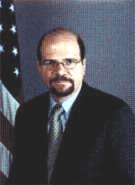
They came in their twos and threes. The State media and spooks, I mean. They got what they wanted, enough material to spin a yarn. Dumisani Sibanda (see Chronicle Wednesday 4 May 2005) was at his gregarious best, turning a good story on its head, just to please his paymasters. "NUST students give Dell Hell?" My foot!
I must admit that I did not attend any of the events that were addressed by the US Ambassador to Zimbabwe, Christopher Dell but I can tel you this: a cursory glance at all the other publications, both print and online have a different story...that the ambassador did not mince his words and told it like it was.
A sample of choice quotes from the lecturer:
"Beyond the policy front, freedom of expression is also a crucial element in a functioning market economy on the microeconomic level. Investors, companies, and individuals cannot make informed economic decisions in their interest without free access to information."
"It is undeniable that Zimbabwe's economy is in a downward spiral unmatched by any other country not at war. Look behind nearly every economic dysfunction in this country ... and you will likely find some impediment to a free flow of information or the freedom to act on that information."
"If you rely on the state media, things aren't that bad. In fact, the outlook is rosy indeed and recovery is only months away. Read the dailies, listen to state radio, watch state television we are told the economy will grow by between 1-2 percent. I for one will watch with interest to see how this turnaround will be effected."
Now, looking at the Dumisani story and the subsequent puff piece in today's Chronicle editorial, one gets to appreciate how low part of our media has sunk. One hopes that the damage done to Zimbabwean press will be reversible. One does not help but feel sorry for the likes of Sibanda and his colleagues in the state media. Still very much underpaid but still singing for their supper.
Wednesday, March 15, 2006
Why are we complaining?
In Germany after the First World War, prices were doubling every 49 hours. Workers were paid daily or more often with bundles of cash, and would dash out to buy something before it grew more expensive. Someone could buy a bottle of wine, and the next morning the empty bottle could be sold for more than it had cost full. The largest denomination was a 100-billion mark bill, which would buy two postage stamps.
In Bolivia during the mid-eighties, inflation was at 25,000 per cent annually. The stack of money needed to buy a chocolate bar far outweighed the candy.
In Argentina in 1989, prices for some things would double overnight. Many restaurants and stores refused to accept credit cards, because the charges paid at the end of the month were worth much less than they were at the time of purchase.
In Yugoslavia, the rate of inflation was 5 quadrillion per cent between Oct 1, 1993 and Jan 24, 1994. (A quadrillion is a 16-digit number). At the time, it was against the law to refuse personal cheques. Some people wrote them, knowing that in the few days it took for the cheques to clear, inflation would wipe out as much as 90 per cent of the cost of covering the cheques.
We Zimbabweans are only at 680% and you we are complaining?
In Bolivia during the mid-eighties, inflation was at 25,000 per cent annually. The stack of money needed to buy a chocolate bar far outweighed the candy.
In Argentina in 1989, prices for some things would double overnight. Many restaurants and stores refused to accept credit cards, because the charges paid at the end of the month were worth much less than they were at the time of purchase.
In Yugoslavia, the rate of inflation was 5 quadrillion per cent between Oct 1, 1993 and Jan 24, 1994. (A quadrillion is a 16-digit number). At the time, it was against the law to refuse personal cheques. Some people wrote them, knowing that in the few days it took for the cheques to clear, inflation would wipe out as much as 90 per cent of the cost of covering the cheques.
We Zimbabweans are only at 680% and you we are complaining?
Friday, March 03, 2006
The Earthquake That Shook Zimbabwe
A massive earthquake that shook most of Southern Africa on 24 February 2005 was centered in Mozambique. It measured 7.5 on the Richter scale and surprisingly most Zimbabweans thought the quake was caused by thieves trying to break into their homes. However,seriously, this is what some of Zimbabwe's prominent people thought.
Gideon GONO (Central Bank Governor) - The quake was caused by the shifting of the poverty datum line.
Gift CHIMANIKIRE (Pro-Senate MDC Presidential hopeful) – The earthquake was caused by Arthur Mutambara (another MDC presidential hopeful eventually elected substantive leader of the faction)
Thomas MATIKITI (sci-fi freak) – An UFO landed on top of our house!
Joseph CHINOTIMBA (self-styled War vet) - Thi MDC thinks theyi can scared us, manje we as the war veterenzi we are going to do more earthikwekis bigger than theyazi!
Jonathan MOYO (Former Government spin doctor) - It doesn't take a rocket scientist to see that this was the work of the opposition, bent on pleasing their colonial masters the British and the Americans. They want to tarnish the image of our country. Now let them be warned that we will not be intimidated and we are going ahead with the land reform programme.
Tafataona MAHOSO (Political commentator) - EARTHQUAKE?? What Earthquake? These are malicious allegations to discredit Zimbabwe ahead of the visit by the IMF.
Aenias CHIGWEDERE (Minister of Education Sport & Culture) - As you well know, we now set our own O'level and A'level exams after withdrawing from the British Cambridge University. We wanted our students to have first hand experience on some of the things they learn at school. Because of this happening, we will be hosting “The Earthquake Commemoration Gala” at Dulibadzimu Stadium in Beitbridge, and then there will also be an Earthquake Challenge Cup match at Rufaro Stadium between Dynamos & Highlanders to raise funds for the Earthquake Education Scholarships.
Archbishop Pius NCUBE (Catholic Archbishop of Bulawayo) - This is what we have been praying for all along. God is not happy with Robert Mugabe's continued abuse of power. Can you explain why this happened on the day of his 82nd birthday? The Gods are not happy even our Ancestors are surely not pleased.
Reverend Obediah MUSINDO (just another overzealous ZANU PF supporter) -Yes! We thank the Almighty God for President vedu, on his birthday. It will be remembered that there was an earthquake, which goes to show without doubt that he is chosen by God to run this country.
Ignatious CHOMBO (Minister of Local Government and Housing) - Yes we would like to thank those who were involved in the Earthquake, it shows their patriotism.
Moses CHUNGA (former Dynamos FC coach) – Ehhhhhhhhhh, I won’t comment, becoz ehhhhh, last time I comment my comments ehhhhhhhhh where regarded as myopic and they fired me!.
Francis NHEMA (Minister of Tourism) – Yes, Zimbabwe is most definitely a safe tourist destination, with many natural wonders. First it was the Solar Eclipse now the Earthquake. We would like to assure everyone who missed it that it will happen again same time next month, so they can start making their bookings.
DR ZOBHA (Mzekezeke wanna be)- Ehhhhhhhhhhhhhhhhh Bridget, its very silly, you know, to think that Zimbabwe as a landlocked country can experience Earthquakes. Mncweeeeeeeeeeee, ndagona!
AND THE GREATEST ONE FROM THE BIG MAN HIMSELF UNCLE BOB - Regrettably, we continue to see the unfortunate and futile tendency to use methods in this area as reward for political compliance and malleability. We are now being coerced to accept and believe that a new political-cum-religious doctrine has arisen, namely that "There is but one political god, George W. Bush, and Tony Blair is his prophet". Even the so-called earthquakes will not stop us, or bring about regime change. Zimbabwe is sovereign country!
Philip CHIYANGWA (Flamboyant Businessman) - You see, these shoes I am wearing are so expensive that the day I first put them on they caused an earthquake. Just shows how much money I have.
Authored by an unknown Zimbabwean with a wicked sense of humour.
Gideon GONO (Central Bank Governor) - The quake was caused by the shifting of the poverty datum line.
Gift CHIMANIKIRE (Pro-Senate MDC Presidential hopeful) – The earthquake was caused by Arthur Mutambara (another MDC presidential hopeful eventually elected substantive leader of the faction)
Thomas MATIKITI (sci-fi freak) – An UFO landed on top of our house!
Joseph CHINOTIMBA (self-styled War vet) - Thi MDC thinks theyi can scared us, manje we as the war veterenzi we are going to do more earthikwekis bigger than theyazi!
Jonathan MOYO (Former Government spin doctor) - It doesn't take a rocket scientist to see that this was the work of the opposition, bent on pleasing their colonial masters the British and the Americans. They want to tarnish the image of our country. Now let them be warned that we will not be intimidated and we are going ahead with the land reform programme.
Tafataona MAHOSO (Political commentator) - EARTHQUAKE?? What Earthquake? These are malicious allegations to discredit Zimbabwe ahead of the visit by the IMF.
Aenias CHIGWEDERE (Minister of Education Sport & Culture) - As you well know, we now set our own O'level and A'level exams after withdrawing from the British Cambridge University. We wanted our students to have first hand experience on some of the things they learn at school. Because of this happening, we will be hosting “The Earthquake Commemoration Gala” at Dulibadzimu Stadium in Beitbridge, and then there will also be an Earthquake Challenge Cup match at Rufaro Stadium between Dynamos & Highlanders to raise funds for the Earthquake Education Scholarships.
Archbishop Pius NCUBE (Catholic Archbishop of Bulawayo) - This is what we have been praying for all along. God is not happy with Robert Mugabe's continued abuse of power. Can you explain why this happened on the day of his 82nd birthday? The Gods are not happy even our Ancestors are surely not pleased.
Reverend Obediah MUSINDO (just another overzealous ZANU PF supporter) -Yes! We thank the Almighty God for President vedu, on his birthday. It will be remembered that there was an earthquake, which goes to show without doubt that he is chosen by God to run this country.
Ignatious CHOMBO (Minister of Local Government and Housing) - Yes we would like to thank those who were involved in the Earthquake, it shows their patriotism.
Moses CHUNGA (former Dynamos FC coach) – Ehhhhhhhhhh, I won’t comment, becoz ehhhhh, last time I comment my comments ehhhhhhhhh where regarded as myopic and they fired me!.
Francis NHEMA (Minister of Tourism) – Yes, Zimbabwe is most definitely a safe tourist destination, with many natural wonders. First it was the Solar Eclipse now the Earthquake. We would like to assure everyone who missed it that it will happen again same time next month, so they can start making their bookings.
DR ZOBHA (Mzekezeke wanna be)- Ehhhhhhhhhhhhhhhhh Bridget, its very silly, you know, to think that Zimbabwe as a landlocked country can experience Earthquakes. Mncweeeeeeeeeeee, ndagona!
AND THE GREATEST ONE FROM THE BIG MAN HIMSELF UNCLE BOB - Regrettably, we continue to see the unfortunate and futile tendency to use methods in this area as reward for political compliance and malleability. We are now being coerced to accept and believe that a new political-cum-religious doctrine has arisen, namely that "There is but one political god, George W. Bush, and Tony Blair is his prophet". Even the so-called earthquakes will not stop us, or bring about regime change. Zimbabwe is sovereign country!
Philip CHIYANGWA (Flamboyant Businessman) - You see, these shoes I am wearing are so expensive that the day I first put them on they caused an earthquake. Just shows how much money I have.
Authored by an unknown Zimbabwean with a wicked sense of humour.
Friday, February 17, 2006
Comment: Passing off rubbish as news
THE state-run Chronicle newspaper ran a story under the headline: “Studio 7 linked to NUST demo,” suggesting that the Voice if America hosted radio station paid students to destroy property during a demonstration at the Bulawayo campus on Wednesday. The state newspaper, dare I say, is plumbing the depths of incredulity on this one. It’s just like saying that aliens have landed in Lobengula Street. (The full Chronicle article is republished below if not just for its entertainment value.)
One is reminded of a story the paper ran on 22 April 2002 claiming that the opposition Movement for Democratic Change (MDC) was planning to bomb landmark buildings in Bulawayo. The veracity of that story was subject to an embarrassing retraction late last year, a sad legacy of the demented brand of journalism nurtured by former Government spin doctor Jonathan Moyo at Zimpapers.
The story has all the hallmarks of having been being cooked then planted. The reason is open to speculation. The main issue here is of a newspaper that insults our intelligence with such kind of hogwash. Let us look at the demerits of the story. For one, none of the quoted sources are identified by name. Based as it is on mere speculation without a semblance of verification, the story should not have seen the light of day. Unless of course, the hand of the editor was forced.
The ‘Studio 7 employees based in the city’ are not identified either. Who are they? Shouldn’t they be arrested? Can we really expect Brian Chitembwe to follow up on his story? For a paper whose reputation for investigative journalism borders from zero to none, I wouldn’t place my bets on it. The paper also implies that students at NUST are so dumb that they have to be influenced by 'outside forces' for them to act on issues of their welfare. Such a claim can only be used to raise the stakes so as to justify the high-handedness with which the demo was suppressed by internal security.
While the destruction of property should be roundly condemned, the circumstances that led to that unfortunate incident should be a matter requiring full investigation. One cannot rule out provocation or the mishandling of an otherwise routine event on the University’s calendar. Demonstrations at NUST are an annual ritual and students usually disperse peacefully after being addressed by the authorities. This time around, they were denied that opportunity for reasons that are yet to be revealed.
An independent inquiry should examine all aspects if not to allay any fears or suspicions among those involved. That includes the claim that most of those arrested were ‘soft targets,’ minding their own business when caught up in the melee. Or claims that are yet to be substantiated, that students were merely a Trojan horse for militant colleagues who came in from the University of Zimbabwe in Harare to foment trouble. Such an inquiry would also emphasise the need for a comprehensive crisis plan for the university.
And to claim that a nameless opposition party could also have been behind the disturbances! Come on! We have heard that one played before and is so out of tune. That story was certainly not headline material if you ask me. In fact, it should not have been published at all. Those assertions are baseless until verified and substantiated. You can not take hearsay and publish it as authentic testimony. Any journalist with elementary training should tell you that.
Dr Thomas Muller, a British physician got it right when he said, “Get the facts, or the facts will get you. And when you get them, get them right, or they will get you wrong.” But then who at the Chronicle is listening? Your guess is just as good as mine.
And now, the story...
Studio 7 linked to NUST demo
By Brian Chitemba (The Chronicle 17 February 2006)
A pirate radio station, Studio 7 allegedly paid National University of Science and Technology students to stage violent demonstrations at the campus on Wednesday, Chronicle has learnt.
Sources at the university told this newspaper yesterday that Studio 7 employees based in the city held a meeting with the students on Wednesday morning.During the meeting they allegedly bought beer and gave money to some of the students so that they could lead the protests.
A source said the students were urged to cause unrest in order for the anti-Government pirate radio station to discredit the State in its bulletins.
Following the meeting, the students went on a rampage and destroyed property worth billions of dollars at the administration block on the pretext that they were not happy with the increase of fees from $3 million to between $30 million and $90 million.
“According to our investigations, the students were paid to destroy property at the institution. The students were used by anti-Government elements bent on tarnishing the image of the country,” said the source.
“The students held a meeting on Wednesday between 10 am and 11am and from the hall they stormed the administration block demanding to be addressed by the Vice-Chancellor Professor Lindela Ndlovu. The meeting had been called to discuss the issue of fees hikes. What’s disturbing is that some of the students were quoted by Studio 7 on Wednesday night saying negative things about the Government.”
The source said investigations also revealed an opposition party had a hand in the demonstrations.“We are still gathering information but we believe a certain opposition party might have played a big role in mobilising the students to be rowdy,” he said.
The source said the students had no reason to protest because the university had not sent them home for failing to pay fees.
Convoluted utter rubbish or what? You tell me.
One is reminded of a story the paper ran on 22 April 2002 claiming that the opposition Movement for Democratic Change (MDC) was planning to bomb landmark buildings in Bulawayo. The veracity of that story was subject to an embarrassing retraction late last year, a sad legacy of the demented brand of journalism nurtured by former Government spin doctor Jonathan Moyo at Zimpapers.
The story has all the hallmarks of having been being cooked then planted. The reason is open to speculation. The main issue here is of a newspaper that insults our intelligence with such kind of hogwash. Let us look at the demerits of the story. For one, none of the quoted sources are identified by name. Based as it is on mere speculation without a semblance of verification, the story should not have seen the light of day. Unless of course, the hand of the editor was forced.
The ‘Studio 7 employees based in the city’ are not identified either. Who are they? Shouldn’t they be arrested? Can we really expect Brian Chitembwe to follow up on his story? For a paper whose reputation for investigative journalism borders from zero to none, I wouldn’t place my bets on it. The paper also implies that students at NUST are so dumb that they have to be influenced by 'outside forces' for them to act on issues of their welfare. Such a claim can only be used to raise the stakes so as to justify the high-handedness with which the demo was suppressed by internal security.
While the destruction of property should be roundly condemned, the circumstances that led to that unfortunate incident should be a matter requiring full investigation. One cannot rule out provocation or the mishandling of an otherwise routine event on the University’s calendar. Demonstrations at NUST are an annual ritual and students usually disperse peacefully after being addressed by the authorities. This time around, they were denied that opportunity for reasons that are yet to be revealed.
An independent inquiry should examine all aspects if not to allay any fears or suspicions among those involved. That includes the claim that most of those arrested were ‘soft targets,’ minding their own business when caught up in the melee. Or claims that are yet to be substantiated, that students were merely a Trojan horse for militant colleagues who came in from the University of Zimbabwe in Harare to foment trouble. Such an inquiry would also emphasise the need for a comprehensive crisis plan for the university.
And to claim that a nameless opposition party could also have been behind the disturbances! Come on! We have heard that one played before and is so out of tune. That story was certainly not headline material if you ask me. In fact, it should not have been published at all. Those assertions are baseless until verified and substantiated. You can not take hearsay and publish it as authentic testimony. Any journalist with elementary training should tell you that.
Dr Thomas Muller, a British physician got it right when he said, “Get the facts, or the facts will get you. And when you get them, get them right, or they will get you wrong.” But then who at the Chronicle is listening? Your guess is just as good as mine.
And now, the story...
Studio 7 linked to NUST demo
By Brian Chitemba (The Chronicle 17 February 2006)
A pirate radio station, Studio 7 allegedly paid National University of Science and Technology students to stage violent demonstrations at the campus on Wednesday, Chronicle has learnt.
Sources at the university told this newspaper yesterday that Studio 7 employees based in the city held a meeting with the students on Wednesday morning.During the meeting they allegedly bought beer and gave money to some of the students so that they could lead the protests.
A source said the students were urged to cause unrest in order for the anti-Government pirate radio station to discredit the State in its bulletins.
Following the meeting, the students went on a rampage and destroyed property worth billions of dollars at the administration block on the pretext that they were not happy with the increase of fees from $3 million to between $30 million and $90 million.
“According to our investigations, the students were paid to destroy property at the institution. The students were used by anti-Government elements bent on tarnishing the image of the country,” said the source.
“The students held a meeting on Wednesday between 10 am and 11am and from the hall they stormed the administration block demanding to be addressed by the Vice-Chancellor Professor Lindela Ndlovu. The meeting had been called to discuss the issue of fees hikes. What’s disturbing is that some of the students were quoted by Studio 7 on Wednesday night saying negative things about the Government.”
The source said investigations also revealed an opposition party had a hand in the demonstrations.“We are still gathering information but we believe a certain opposition party might have played a big role in mobilising the students to be rowdy,” he said.
The source said the students had no reason to protest because the university had not sent them home for failing to pay fees.
Convoluted utter rubbish or what? You tell me.
Thursday, February 16, 2006
Tanzania bans the Mini. Are we next?
 THE old geezers in Tanzania have banned the mini skirt. It had to come sometime. They claim that the very liberal fashion item causes of AIDS. Really? While I won’t go into the temerity or otherwise of that argument, may I be allowed to pause to think deeply over the dire ramification the move will be to the entire male species. Coming as it does on the eve of Valentine’s Day was in extreme bad taste to say the least.
Now let me get this straight. All those years ago the loin cloth was just about the only thing that separated women (and men) from being lashed for indecent exposure. Ogling wasn't even an issue until the missionaries ambled over with their sweet talk about morals and civilisation. Talk about double standards. They even had problems convincing the locals that they were half naked...or is it half dressed?
What really seems to be the problem? Some nerd hypothesised the link between rape and the wearing of mini-skirts. I will be the first to admit that there are perverts prowling the streets who are turned into raving sex maniacs at the slightest sight of thigh. No, not chicken thigh stupid! My beef is on why they have punish the rest of us just because some demented misfits fail to contain their wild urges? But to link the mini to the spread of HIV really takes the cake.
Mini-skirts may admittedly pose a traffic hazard. Then the road safety chaps have to quantify the number of car accidents that are the direct result of drivers being distracted by women wearing minis. That, I am sad to say, is yet to happen. I have read somewhere that there are women who try to influence the outcome of their driving tests by wearing skimpies. Well, the silence from the direction of the Driving Instructors and Inspectors Association on this allegation is certainly deafening. This assumes that there is a propensity among males to stop thinking rationally at the sight of an exposed part of the female anatomy. Really!
The billion Zimbabwe dollar question is; why do ladies choose to wear minis? To show more leg of course! Interestingly enough they still go through all those motions of trying to pull the miniscule item clothing back over their exposed legs, creating more attention in the process. Its all part of the act if you ask me. Ask the feminists and they will tell you that they are exercising one of their basic freedoms – the freedom of expression; the freedom to expose themselves! Which explains why the old men of Tanzania are so worked up. Its not anyone's fault that they are over the hill. Try Viagra, for God's sake!
Not that I mind at all. I have to endure many a elbow in the ribcage as I take too long a glance at a perfect specimen...in the company of the wife. In our language there is a saying; A brave warrior dies in the thick of the battle! Count me among the war veterans. My eyes refuse to follow clear instructions every time. Like every hot blooded male, I have to admit that they do make the environment look more interesting in a manner of speaking. They add a bit of – eh – ouch! More colour!
Today’s woman is daring enough to take the risk in the name of fashion. Pity they now have to contend with Mother Grundy in Tanzania. In Zimbabwe, we await the inevitable with a sore heart (and ribs) indeed.
Friday, February 10, 2006
"The Wheels have certainly come off!"
Latest media reports (Friday 10 February 2006) indicate that President Thabo Mbeki's patience with Zimbabwe have surely run thin. In an interview with the SABC last Sunday, Mbeki showed a degree of impatience with events north of the border with South Africa and even went on to hint that the power outages and the reported directive to SA oil companies to cut supplies to Harare were "certainly part of that pressure, but more by the law of unintended consequences than hard design."
"If this (the shortages) illustrates the extent of their reliance on South Africa, then it is all good and well," Mbeki is quoted as saying quite omniously for the Mugabe regime.
For long, many Zimbabweans and South Africans have criticised the South African president's so-called "quiet diplomacy." Among them, former Zimbabwe information guru turned opposition MP, Jonathan Moyo waded into the fray fresh from his ignominious fall from the Zanu PF gravy train. Here I republish that article written last year coutersy of Trevor Ncube's Mail and Guardian. I advise that you also read my earlier article, "Lest We Forget..." to give a bit of context as to where Jonathan Moyo is coming from.
What is Thabo Mbeki trying to achieve?
By Jonathan Moyo Mail and Guardian ©2005
11 August 2005
President Thabo Mbeki and his government are desperately trying to limit public embarrassment over the widely publicised political conditions they have reportedly attached to an emergency bail-out for President Robert Mugabe. They should have followed the diplomatic principle enunciated by classical Greek dramatist Euripides - that a foreign ally need not own the land it seeks to help.
In fairness, there is no evidence that Mbeki wants to own Zimbabwe. But there are many indications that he wants to own the solution to the Zimbabwean crisis.
Mbeki's so-called "quiet diplomacy" has now become a very loud affair. For the first time his efforts to broker a solution to the Zimbabwean quagmire are at risk of irretrievably crumbling, with far--reaching consequences for South Africa's capacity to influence regional and continental affairs. It seems Mugabe has once more outfoxed Mbeki in a high-stakes diplomatic standoff over the resolution of the crisis that has dogged the latter's presidency since 1999.
Through his outburst earlier this week against South African calls for him to open new dialogue with the opposition, the Zimbabwean president has opportunistically put himself in a win-win position over the loan debacle. Either his beleaguered Zanu-PF government will ultimately get the loan sought from South Africa, with the usual financial securities but without the reported political conditions attached to it, or South Africa will not grant the loan because of Mugabe's rejection of the political conditions. In the latter case, Mbeki will be exposed as a duplicitous Machiavellian who conveniently waves the pan-African solidarity flag while using methods that smack of imperialism against a desperate neighbour and comrade in need.
The way the political conditionality was reported in the South African media over the weekend did not help Mbeki. There was an authoritative ring to the coverage that the South African government had given Mugabe and Zanu-PF a week to sign up to a series of tough reforms that included talking to the Movement for Democratic Change (MDC), adopting a new constitution with the agreement of the MDC, repealing media and security laws, undoing the negative consequences of the recent land reform programme and holding fresh elections. Clearly, the reports had been planted or leaked by government sources.
In diplomacy, whether quiet or loud, parties committed to the attainment of well-defined objectives in sensitive negotiations do not leak or plant media reports before agreement has been reached.
To do so guarantees the collapse of negotiations. Mugabe's outburst against the reported political conditionality could have been avoided by keeping the tricky aspects of the horse-trading under wraps until the necessary signatures were appended.
Why, then, did the leaks happen? Perhaps those responsible were mischievous elements in, or associated with, the South African government, who did not want the loan deal successfully concluded from the outset. The leak could also have come from the International Monetary Fund, or even Zimbabwean government officials who wanted to ensure that the deal went nowhere because they are profiting from the crisis.
From the outset, the Zimbabwean government's position was that any loan would be a purely financial transaction with the usual guarantees and securities put up by the central banks and treasuries of the two nations, without a political trade-off.
Two recent statements by Mbeki must have reinforced Mugabe's belief that South Africa was on his side and would not try to force political concessions from him. In one case, he said the Zimbabwean government had not undertaken a meaningful land reform programme in the 1980s and early 1990s because African states, through Tanzania's Mwalimu Nyerere, persuaded Mugabe not to scare South African whites before the end of apartheid and the attainment of democracy in South Africa.
As Mugabe has said this all along, this must have been music to his ears.
On another occasion, Mbeki said the debt owed by Zimbabwe was legitimate and had nothing to do with corruption. Debt had started accumulating soon after independence in 1980 when the Zimbabwe government embarked on education and health reforms to redress racial imbalances.
If Mbeki understood these two fundamental issues, Mugabe reasoned, he would be the last to turn a straightforward loan request into a diplomatic trap using the political conditions all Third World countries detest. This is why in his outburst this week, Mugabe referred to Mbeki and the ANC government as "those we expected to know better".
Mbeki's diplomatic initiative to resolve the Zimbabwean political and economic crisis has been conspicuous by its lack of clear and well-defined objectives that can be measured in determining the initiative's failure or success.
What exactly does he want to achieve? What are the objectives of "quiet diplomacy"? Is he trying to bring the MDC to power, to keep Zanu-PF in power, or get Zanu-PF and the MDC to form a coalition government, or what?
"Getting Zimbabweans to resolve their own problems by talking to each other" is not an objective worthy of a diplomatic onslaught. You can get Zimbabweans to talk to each other without agreeing on anything until the cows come home. You can also get Zanu-PF and the MDC to agree to a coalition government where a few MDC leaders become ministers or deputy ministers. This, too, would not lead to any changes in Zimbabwe's national governance or policies, except that MDC ministers would effectively become Zanu-PF.
Some Zanu-PF old-guard elements, supported by some MDC leaders, want Mugabe arm-twisted into accepting the reported political conditions, with a reform time-table that would involve him retiring in 2008 and scrapping presidential elections due then in order to hold them together with parliamentary elections in 2010. At that stage, a new constitution agreed between Zanu-PF and the MDC would come into effect, while 2008 to 2010 would be a transitional period presided over by Joyce Mujuru as caretaker president and Zanu-PF's presidential candidate in 2010.
This too would not resolve the ongoing crisis in terms of the objectionable policies that are bleeding Zimbabwe.
If Mbeki's quiet diplomacy seeks any of the above, the contradictions exposed by the loan debacle are certain to be its graveyard. This is because the Zimbabwean crisis has become wider and deeper than Mbeki's noisy quiet diplomacy can deal with. Zimbabweans have lost all hope not just in Mugabe and Zanu-PF, but also in Morgan Tsvangirai and the MDC. They are looking for an ideological and policy alternative to ensure that Zimbabwe will never again be a colony, never again be a tyranny and never again be a basket case.
Jonathan Moyo is a Zimbabwean MP and Robert Mugabe's former information chief
Moyo: That was then ...
"There is no food crisis in Zimbabwe. There is no food crisis in Bulawayo." -- September 22 2004
"Where the army is deployed, people should not expect a picnic." -- On the deployment of the army against civilians, April 11 2003
"Mercenaries of any kind, whether carrying the sword or the pen, must and will be exposed, and they will suffer the full consequences of the law." -- March 11 2004
"Next time you send us a letter, we will put it in the dustbin and we have concluded that you do not deserve to be taken seriously." -- In a reply to a letter of complaint by Reporters Sans Frontires after the arrest of journalists in Zimbabwe, April 17 2002
"It is absolutely unreasonable to suggest that because we have undertaken to curb violence that there should be no single person throwing a stone in Zimbabwe. We're talking about Zimbabwe, not heaven." -- On pre-election violence, March 3 2002
"Thomas Jefferson said it was better to have newspapers without government. He was very, very wrong. It is far better to have government without newspapers." -- February 1 2002
"If the apartheid press expects us to treat them with kid gloves and allow them to roam around our country, then they don't understand where they are." -- On the South African media, December 19 2001
"When a political party has no loyalty, then it should not expect to be treated fairly." -- On denying media access to the opposition MDC, October 4 2004
"It is clear to anyone who can read the writing on the wall that Zanu-PF is the future." -- July 31 2001
"An article is not a bible where you have written the truth once and for all and for all time, and the environment is frozen. One has to look at the context." -- On his metamorphosis from critic to Mugabe apologist, March 1 2001
"A passport is a privilege and not a right." -- On the withdrawal of passports of government critics, February 16 2001
"If this (the shortages) illustrates the extent of their reliance on South Africa, then it is all good and well," Mbeki is quoted as saying quite omniously for the Mugabe regime.
For long, many Zimbabweans and South Africans have criticised the South African president's so-called "quiet diplomacy." Among them, former Zimbabwe information guru turned opposition MP, Jonathan Moyo waded into the fray fresh from his ignominious fall from the Zanu PF gravy train. Here I republish that article written last year coutersy of Trevor Ncube's Mail and Guardian. I advise that you also read my earlier article, "Lest We Forget..." to give a bit of context as to where Jonathan Moyo is coming from.
What is Thabo Mbeki trying to achieve?

By Jonathan Moyo Mail and Guardian ©2005
11 August 2005
President Thabo Mbeki and his government are desperately trying to limit public embarrassment over the widely publicised political conditions they have reportedly attached to an emergency bail-out for President Robert Mugabe. They should have followed the diplomatic principle enunciated by classical Greek dramatist Euripides - that a foreign ally need not own the land it seeks to help.
In fairness, there is no evidence that Mbeki wants to own Zimbabwe. But there are many indications that he wants to own the solution to the Zimbabwean crisis.
Mbeki's so-called "quiet diplomacy" has now become a very loud affair. For the first time his efforts to broker a solution to the Zimbabwean quagmire are at risk of irretrievably crumbling, with far--reaching consequences for South Africa's capacity to influence regional and continental affairs. It seems Mugabe has once more outfoxed Mbeki in a high-stakes diplomatic standoff over the resolution of the crisis that has dogged the latter's presidency since 1999.
Through his outburst earlier this week against South African calls for him to open new dialogue with the opposition, the Zimbabwean president has opportunistically put himself in a win-win position over the loan debacle. Either his beleaguered Zanu-PF government will ultimately get the loan sought from South Africa, with the usual financial securities but without the reported political conditions attached to it, or South Africa will not grant the loan because of Mugabe's rejection of the political conditions. In the latter case, Mbeki will be exposed as a duplicitous Machiavellian who conveniently waves the pan-African solidarity flag while using methods that smack of imperialism against a desperate neighbour and comrade in need.
The way the political conditionality was reported in the South African media over the weekend did not help Mbeki. There was an authoritative ring to the coverage that the South African government had given Mugabe and Zanu-PF a week to sign up to a series of tough reforms that included talking to the Movement for Democratic Change (MDC), adopting a new constitution with the agreement of the MDC, repealing media and security laws, undoing the negative consequences of the recent land reform programme and holding fresh elections. Clearly, the reports had been planted or leaked by government sources.
In diplomacy, whether quiet or loud, parties committed to the attainment of well-defined objectives in sensitive negotiations do not leak or plant media reports before agreement has been reached.
To do so guarantees the collapse of negotiations. Mugabe's outburst against the reported political conditionality could have been avoided by keeping the tricky aspects of the horse-trading under wraps until the necessary signatures were appended.
Why, then, did the leaks happen? Perhaps those responsible were mischievous elements in, or associated with, the South African government, who did not want the loan deal successfully concluded from the outset. The leak could also have come from the International Monetary Fund, or even Zimbabwean government officials who wanted to ensure that the deal went nowhere because they are profiting from the crisis.
From the outset, the Zimbabwean government's position was that any loan would be a purely financial transaction with the usual guarantees and securities put up by the central banks and treasuries of the two nations, without a political trade-off.
Two recent statements by Mbeki must have reinforced Mugabe's belief that South Africa was on his side and would not try to force political concessions from him. In one case, he said the Zimbabwean government had not undertaken a meaningful land reform programme in the 1980s and early 1990s because African states, through Tanzania's Mwalimu Nyerere, persuaded Mugabe not to scare South African whites before the end of apartheid and the attainment of democracy in South Africa.
As Mugabe has said this all along, this must have been music to his ears.
On another occasion, Mbeki said the debt owed by Zimbabwe was legitimate and had nothing to do with corruption. Debt had started accumulating soon after independence in 1980 when the Zimbabwe government embarked on education and health reforms to redress racial imbalances.
If Mbeki understood these two fundamental issues, Mugabe reasoned, he would be the last to turn a straightforward loan request into a diplomatic trap using the political conditions all Third World countries detest. This is why in his outburst this week, Mugabe referred to Mbeki and the ANC government as "those we expected to know better".
Mbeki's diplomatic initiative to resolve the Zimbabwean political and economic crisis has been conspicuous by its lack of clear and well-defined objectives that can be measured in determining the initiative's failure or success.
What exactly does he want to achieve? What are the objectives of "quiet diplomacy"? Is he trying to bring the MDC to power, to keep Zanu-PF in power, or get Zanu-PF and the MDC to form a coalition government, or what?
"Getting Zimbabweans to resolve their own problems by talking to each other" is not an objective worthy of a diplomatic onslaught. You can get Zimbabweans to talk to each other without agreeing on anything until the cows come home. You can also get Zanu-PF and the MDC to agree to a coalition government where a few MDC leaders become ministers or deputy ministers. This, too, would not lead to any changes in Zimbabwe's national governance or policies, except that MDC ministers would effectively become Zanu-PF.
Some Zanu-PF old-guard elements, supported by some MDC leaders, want Mugabe arm-twisted into accepting the reported political conditions, with a reform time-table that would involve him retiring in 2008 and scrapping presidential elections due then in order to hold them together with parliamentary elections in 2010. At that stage, a new constitution agreed between Zanu-PF and the MDC would come into effect, while 2008 to 2010 would be a transitional period presided over by Joyce Mujuru as caretaker president and Zanu-PF's presidential candidate in 2010.
This too would not resolve the ongoing crisis in terms of the objectionable policies that are bleeding Zimbabwe.
If Mbeki's quiet diplomacy seeks any of the above, the contradictions exposed by the loan debacle are certain to be its graveyard. This is because the Zimbabwean crisis has become wider and deeper than Mbeki's noisy quiet diplomacy can deal with. Zimbabweans have lost all hope not just in Mugabe and Zanu-PF, but also in Morgan Tsvangirai and the MDC. They are looking for an ideological and policy alternative to ensure that Zimbabwe will never again be a colony, never again be a tyranny and never again be a basket case.
Jonathan Moyo is a Zimbabwean MP and Robert Mugabe's former information chief
Moyo: That was then ...
"There is no food crisis in Zimbabwe. There is no food crisis in Bulawayo." -- September 22 2004
"Where the army is deployed, people should not expect a picnic." -- On the deployment of the army against civilians, April 11 2003
"Mercenaries of any kind, whether carrying the sword or the pen, must and will be exposed, and they will suffer the full consequences of the law." -- March 11 2004
"Next time you send us a letter, we will put it in the dustbin and we have concluded that you do not deserve to be taken seriously." -- In a reply to a letter of complaint by Reporters Sans Frontires after the arrest of journalists in Zimbabwe, April 17 2002
"It is absolutely unreasonable to suggest that because we have undertaken to curb violence that there should be no single person throwing a stone in Zimbabwe. We're talking about Zimbabwe, not heaven." -- On pre-election violence, March 3 2002
"Thomas Jefferson said it was better to have newspapers without government. He was very, very wrong. It is far better to have government without newspapers." -- February 1 2002
"If the apartheid press expects us to treat them with kid gloves and allow them to roam around our country, then they don't understand where they are." -- On the South African media, December 19 2001
"When a political party has no loyalty, then it should not expect to be treated fairly." -- On denying media access to the opposition MDC, October 4 2004
"It is clear to anyone who can read the writing on the wall that Zanu-PF is the future." -- July 31 2001
"An article is not a bible where you have written the truth once and for all and for all time, and the environment is frozen. One has to look at the context." -- On his metamorphosis from critic to Mugabe apologist, March 1 2001
"A passport is a privilege and not a right." -- On the withdrawal of passports of government critics, February 16 2001
Thursday, January 26, 2006
Why are we always running late?
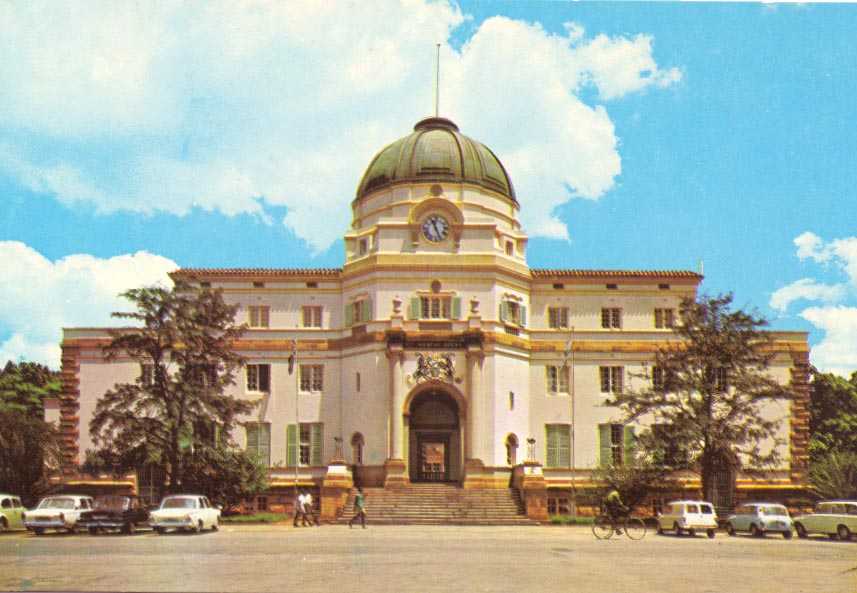 There is one thing that we Zimbabweans are so averse to, and that is keeping time. I’ve met dozens of people who are always running late (and that, of course includes me.) Many of them have apparently never heard of that great invention called the watch.
Among those who have received news about the technological breakthrough, some consider a watch nothing more than a piece of jewellery. If it didn’t display the time, they wouldn’t care, as long as it displayed important information such as "Seiko" or "Rolex."
Most of us have never owned a watch. We think they can do without one, even though we don’t work for the civil service. If I have an important appointment, I try to keep track of time by looking at the sun. If not, I rely on people around me. I last wore a watch in 1996 when I was overseas where time is money. The idea was to sell it immediately I back home. You see, here, money is money. Never forget the danger of being mugged as well.
Of the public clocks that we have here in Bulawayo, its only the one at the City Hall that works most of the time. The one at the Main Post Office has never worked for as long as I can remember. I need not mention the one at the High Court. I’m sure it got stuck at that time when some notorious criminal was hanged ages ago. In fact, there are some who believe that Bulawayo is the city where time stood still. If you compare us to Harare interms of development, that is.
Women are classic time wasters. If one is expected to be at a function at 6pm, one would assume that if you are ready to leave before 5.30pm, you are bound to get there right on time. But the woman has only just entered the bathroom, which means that you still have enough time to read a 200-page novel. Most women in their defence are much better at keeping time than many people I know. And I say that not just because I hate sleeping on the sofa.
People from certain countries seem more inclined to be late. For example, if a Swede invited a Zimbabwean and an Indian to lunch at 1pm, the Zimbabwean will arrive at 3pm, unless he gets a lift from his Indian friend, in which case they will both arrive just in time for supper. And neither of them will act as if anything went wrong.
"Apologise? What for? We got here on the same day!"
My friends at our social soccer club Amavevane have tried to adjust to this chronic disease. For example, if we want to play social soccer at 11pm we ask team members to assemble at 9am for them to arrive at 11am, ensuring that the game will start promptly at 1pm. It's far much better than buying them expensive watches.
However, we will never beat the National Railways of Zimbabwe’s shoddy record of constantly not keeping to their timetable. With such a record, who needs a timetable? The night train leaves late as a matter of principle. Never mind the fact that it arrives in Harare a full day later. Remember, why apologise, at least it arrives this century. The chaps at the NRZ perhaps may rest assured that they fare better than Air Zimbabwe, whose planes never seem to take off.
I have bosses who are very irritated when meeting starts late. Never mind the fact that very little if anything is achieved at these marathon meetings, as long as it starts on time, everything is fine. Perhaps I should buy myself those huge clocks to hang around my necks as a reminder that I should not waste other peoples’ time. In any event, which mugger would find a Zobo clock attractive?
Not just another can of worms
 Hurrah, they are here! My favorite dish has crawled back onto my late after an absence of close to two painful years! I had a fried plate last night and look forward to the cooked creepy crawlies tomorrow! Wanna puke? Don't do it here my dear friend, but then it could be worse. Take those who choose to feast on crab, snail (or is it escargot?) horse, snake, insect, frog, grub, lizard, rat, bat, cat, dog, grasshopper, octopus, tortoise, seal, lobster, prawns, eel, or monkey. Me, I just go for mopane worms.
The caterpillars of the anomalous emperor moth Imbrasia belina, mopane worms are a culinary sensation here in Zimbabwe and the rest of Central and Southern Africa. They are named after the Mopane, a tree that is common in semi-arid areas whose big clover-like leaves are what the worms feast on during metamorphosis. For the poverty stricken people of the region, the Mopane worm, or amacimbi in the local language, is manna from heaven.
The guts are removed through squeezing and the worms are then boiled and left for a day to dry out in the sun. Once dried, they can be used at any time for cooking and the result is a juicy and salty treat.
The Mopane worm has all but replaced traditional agricultural produce as a source of nutrition and income. From the onset of the rain season, when the Mopane forms its telltale leaves, the worms emerge from their cocoons and crawl down the tree. So do worm gatherers from all corners for the harvest.
The worm catching is in itself a spectacle to behold. Scores of people are fanned across the sparse bushes, carrying containers of every conceivable shape and size, filling them to the brim with nature's bounty. The worms are a delicacy mainly among the black population. Connoisseurs say that there are more than 20 ways to prepare the mopane worm dishes. Take them fried as a snack, cooked with tomatoes and onions, boiled or simply dried (See recipes below.) One enterprising entrepreneur has even contemplated canning them.
Whichever way they are prepared, health experts wax lyrical about the dietary advantages of Mopane worms. They more contain protein and roughage than ordinary oats. Posters at health centers in the rural areas recommend the worms as supplement for pregnant women and those living with HIV.
There are those among us who would only eat Mopane worms at gunpoint. The reason is purely psychological. Admittedly, it takes one some time to acquire the taste. One just has to get over the initial phobia that associates the worms with other creepy-crawlies, experts say. In some cases this is blamed on adults who discouraged their children from eating the worms at an early age. This is in spite of the fact that the adults themselves grew up on a diet of worms.
The edible worms are just irresistible in a continent where hunger and famine stalks the land. Their respect knows no borders. They can be found gracing the dinner tables of many households in South Africa, Zambia, Namibia, Botswana and Mozambique. In the Democratic Republic of the Congo (DRC) demand is outstripping supply with a kilogram fetching as much as US$5.
However, there are parts of the continent where the worms are, let’s say, despised. During a trip to Uganda in 1994, the writer attracted strange looks from his hosts when he tried to convince them that there was absolutely nothing wrong with having Mopane worms for dinner. A glossy magazine article that I presented as evidence, including graphic color photographs, only made things worse. In freezing Sweden, Scandinavian hosts could hardly disguise their shock when their Zimbabwean guests attempted to allay their fears describing in graphic detail how good the grubs tasted like. What else besides these awful things did these people eat, they wondered.
Back in Zimbabwe, hundreds of people flock to the southern regions from all corners to get a piece of the action. Predictably, politicians have also waded into the fray. Here, anything that smells of money attracts politicians like flies to a carcass. Government officials complain about the exploitation of poor rural villagers by unscrupulous traders who peg the price at 500,000 Zimbabwean dollars (US$4) for a 20-litre bucket. The going market rate is US$5 a kilogram in the DRC.
Local authorities in areas where Mopane worms are harvested have been vigorously campaigning for a ban on 'outsiders' cashing in on what is regarded by them as an exclusive resource. The issue has turned political and emotions run high at harvest time when scuffles break out between villagers and traders from the city. In Botswana, landowners charge the gatherers a fee for both camping on their property and harvesting.
These traders are sometimes accused of showing little respect for local customs and in turn, the environment. They needlessly chop down trees and desecrate sacred traditional shrines. At least one local authority is issuing licenses to approved traders while others insist on the locals doing the picking themselves and later selling the worms at set prices.
Unfortunately, at the height of the worm-picking season, poor and desperate villagers accept anything they are offered in return, from bags of corn meal, cups and plates to items of clothing in exchange for buckets of the worms. This has made them easy picking for unscrupulous buyers who are out to make a quick and easy buck.
Mopane worms are the salvation to an economically depressed and poverty stricken region. For a continent always reaching out its hand for assistance, the worms offer an opportunity for its people to improve their wretched lives. And they are not going to let any outsider take away their God given right.
RECIPES
Mopane Worm Stew
Ingredients: Dried mopane worms, Tomato (sliced), Onions (chopped), butter or cooking oil, chili sauce (to taste,) salt, pepper and garlic salt to taste Method:
Soak mopane worms in water until soft.
Fry onions in butter or cooking oil.
Add rest of ingredients and cook over slow heat until tender.
Serve with isitswala or sadza (pap or maize meal.)
Method 2
Ingredients 1 cup of dried mopane worms, 1 onion, chopped, 2 green peppers, sliced, 6 tomatoes, diced, 1 tablespoon curry powder, and ½ litre water.
Preparation Wash the worms and boil them for 30 minutes. Drain, then add the rest of the ingredients and simmer for about an hour.
Mopane worms can also be soaked then fried to a crispy TV snack. Yum, yum, yum!
Tuesday, January 24, 2006
Waiting for a miracle?
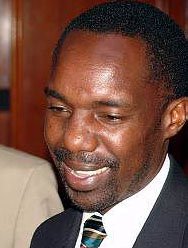 It was in the twilight of the year 2001 that I sat with the chaps in the Dog Section of Selbourne hotel. So called because of the barred windows that only allow those outside a cursory glimpse of what goes on inside. The inhabitants have the privilege of scanning the landscape and the creatures that populate it - including various species of the opposite sex who will be totally unaware that they are being watched. ‘Oggled’ is the correct word for it.
All this is beside the point. The Dog Section refers to the King’s Head bar, melting pot of every opinion about every subject under the sun. The characters therein are as eccentric as the shades of opinion they are wont to defend. So the subject of the political dispensation in Zimbabwe was not so far fetched. Here was bound to be differences. In fact a wide chasm was soon to appear. On the one side where those who were optimistic that Zimbabwe had reached rock bottom and that the only way was up.
The Constitutional Referendum was all but a few months away and we were confident that the people would reject it. Not so much because it was being driven by Zanu PF, but because even at face value, it was an obnoxious piece of paper. The other end of the scale was bent on pooping the party, saying that the rejection of the constitution would be a big mistake and a missed opportunity for Zimbabweans to turn a new leaf. Up until today I am convinced those that supported that school of thought new something that the rest of us didn’t.
Six land and arduous years later, after the war vet pensions, land invasions, The DRC war and Jonathan Moyo we are far worse off than we ever imagined. We blame the government of gross mismanagement and they blame Tony Blair and George Bush. Evidently the chasm is on how we will ever get out of this rut. In fact, most of the population has lost hope that solution will ever come out of the current crop of leaders who are not only clueless but they seem not to give a damn.
Blame storming will get us nowhere. This is why I have resolved to take a different course of action in 2006 and beyond. I have stopped complaining about what his government is doing to me and the rest of us, that is, screwing us into the ground. I avoid answering greeting in the negative. I will look for opportunities where others see none. I refuse to wallow in despair and dejection. I have a talent, nay, talents that I can use to lift myself, family and community from the rut. The reality is that my patience is wearing thin, I hit 42 this year, and clearly time is not on my side.
While the rest are waiting for a miracle that may never come, I will create that miracle. You will know that I am there, making a difference, getting fabulously successful and wealthy and having a good time while doing it. Love or hate me, I will be in your face…permanently. Just you watch me. God help me.
Subscribe to:
Posts (Atom)