In Germany after the First World War, prices were doubling every 49 hours. Workers were paid daily or more often with bundles of cash, and would dash out to buy something before it grew more expensive. Someone could buy a bottle of wine, and the next morning the empty bottle could be sold for more than it had cost full. The largest denomination was a 100-billion mark bill, which would buy two postage stamps.
In Bolivia during the mid-eighties, inflation was at 25,000 per cent annually. The stack of money needed to buy a chocolate bar far outweighed the candy.
In Argentina in 1989, prices for some things would double overnight. Many restaurants and stores refused to accept credit cards, because the charges paid at the end of the month were worth much less than they were at the time of purchase.
In Yugoslavia, the rate of inflation was 5 quadrillion per cent between Oct 1, 1993 and Jan 24, 1994. (A quadrillion is a 16-digit number). At the time, it was against the law to refuse personal cheques. Some people wrote them, knowing that in the few days it took for the cheques to clear, inflation would wipe out as much as 90 per cent of the cost of covering the cheques.
We Zimbabweans are only at 680% and you we are complaining?
Wednesday, March 15, 2006


Friday, March 03, 2006
The Earthquake That Shook Zimbabwe
A massive earthquake that shook most of Southern Africa on 24 February 2005 was centered in Mozambique. It measured 7.5 on the Richter scale and surprisingly most Zimbabweans thought the quake was caused by thieves trying to break into their homes. However,seriously, this is what some of Zimbabwe's prominent people thought.
Gideon GONO (Central Bank Governor) - The quake was caused by the shifting of the poverty datum line.
Gift CHIMANIKIRE (Pro-Senate MDC Presidential hopeful) – The earthquake was caused by Arthur Mutambara (another MDC presidential hopeful eventually elected substantive leader of the faction)
Thomas MATIKITI (sci-fi freak) – An UFO landed on top of our house!
Joseph CHINOTIMBA (self-styled War vet) - Thi MDC thinks theyi can scared us, manje we as the war veterenzi we are going to do more earthikwekis bigger than theyazi!
Jonathan MOYO (Former Government spin doctor) - It doesn't take a rocket scientist to see that this was the work of the opposition, bent on pleasing their colonial masters the British and the Americans. They want to tarnish the image of our country. Now let them be warned that we will not be intimidated and we are going ahead with the land reform programme.
Tafataona MAHOSO (Political commentator) - EARTHQUAKE?? What Earthquake? These are malicious allegations to discredit Zimbabwe ahead of the visit by the IMF.
Aenias CHIGWEDERE (Minister of Education Sport & Culture) - As you well know, we now set our own O'level and A'level exams after withdrawing from the British Cambridge University. We wanted our students to have first hand experience on some of the things they learn at school. Because of this happening, we will be hosting “The Earthquake Commemoration Gala” at Dulibadzimu Stadium in Beitbridge, and then there will also be an Earthquake Challenge Cup match at Rufaro Stadium between Dynamos & Highlanders to raise funds for the Earthquake Education Scholarships.
Archbishop Pius NCUBE (Catholic Archbishop of Bulawayo) - This is what we have been praying for all along. God is not happy with Robert Mugabe's continued abuse of power. Can you explain why this happened on the day of his 82nd birthday? The Gods are not happy even our Ancestors are surely not pleased.
Reverend Obediah MUSINDO (just another overzealous ZANU PF supporter) -Yes! We thank the Almighty God for President vedu, on his birthday. It will be remembered that there was an earthquake, which goes to show without doubt that he is chosen by God to run this country.
Ignatious CHOMBO (Minister of Local Government and Housing) - Yes we would like to thank those who were involved in the Earthquake, it shows their patriotism.
Moses CHUNGA (former Dynamos FC coach) – Ehhhhhhhhhh, I won’t comment, becoz ehhhhh, last time I comment my comments ehhhhhhhhh where regarded as myopic and they fired me!.
Francis NHEMA (Minister of Tourism) – Yes, Zimbabwe is most definitely a safe tourist destination, with many natural wonders. First it was the Solar Eclipse now the Earthquake. We would like to assure everyone who missed it that it will happen again same time next month, so they can start making their bookings.
DR ZOBHA (Mzekezeke wanna be)- Ehhhhhhhhhhhhhhhhh Bridget, its very silly, you know, to think that Zimbabwe as a landlocked country can experience Earthquakes. Mncweeeeeeeeeeee, ndagona!
AND THE GREATEST ONE FROM THE BIG MAN HIMSELF UNCLE BOB - Regrettably, we continue to see the unfortunate and futile tendency to use methods in this area as reward for political compliance and malleability. We are now being coerced to accept and believe that a new political-cum-religious doctrine has arisen, namely that "There is but one political god, George W. Bush, and Tony Blair is his prophet". Even the so-called earthquakes will not stop us, or bring about regime change. Zimbabwe is sovereign country!
Philip CHIYANGWA (Flamboyant Businessman) - You see, these shoes I am wearing are so expensive that the day I first put them on they caused an earthquake. Just shows how much money I have.
Authored by an unknown Zimbabwean with a wicked sense of humour.
Friday, February 17, 2006
Comment: Passing off rubbish as news
THE state-run Chronicle newspaper ran a story under the headline: “Studio 7 linked to NUST demo,” suggesting that the Voice if America hosted radio station paid students to destroy property during a demonstration at the Bulawayo campus on Wednesday. The state newspaper, dare I say, is plumbing the depths of incredulity on this one. It’s just like saying that aliens have landed in Lobengula Street. (The full Chronicle article is republished below if not just for its entertainment value.)
One is reminded of a story the paper ran on 22 April 2002 claiming that the opposition Movement for Democratic Change (MDC) was planning to bomb landmark buildings in Bulawayo. The veracity of that story was subject to an embarrassing retraction late last year, a sad legacy of the demented brand of journalism nurtured by former Government spin doctor Jonathan Moyo at Zimpapers.
The story has all the hallmarks of having been being cooked then planted. The reason is open to speculation. The main issue here is of a newspaper that insults our intelligence with such kind of hogwash. Let us look at the demerits of the story. For one, none of the quoted sources are identified by name. Based as it is on mere speculation without a semblance of verification, the story should not have seen the light of day. Unless of course, the hand of the editor was forced.
The ‘Studio 7 employees based in the city’ are not identified either. Who are they? Shouldn’t they be arrested? Can we really expect Brian Chitembwe to follow up on his story? For a paper whose reputation for investigative journalism borders from zero to none, I wouldn’t place my bets on it. The paper also implies that students at NUST are so dumb that they have to be influenced by 'outside forces' for them to act on issues of their welfare. Such a claim can only be used to raise the stakes so as to justify the high-handedness with which the demo was suppressed by internal security.
While the destruction of property should be roundly condemned, the circumstances that led to that unfortunate incident should be a matter requiring full investigation. One cannot rule out provocation or the mishandling of an otherwise routine event on the University’s calendar. Demonstrations at NUST are an annual ritual and students usually disperse peacefully after being addressed by the authorities. This time around, they were denied that opportunity for reasons that are yet to be revealed.
An independent inquiry should examine all aspects if not to allay any fears or suspicions among those involved. That includes the claim that most of those arrested were ‘soft targets,’ minding their own business when caught up in the melee. Or claims that are yet to be substantiated, that students were merely a Trojan horse for militant colleagues who came in from the University of Zimbabwe in Harare to foment trouble. Such an inquiry would also emphasise the need for a comprehensive crisis plan for the university.
And to claim that a nameless opposition party could also have been behind the disturbances! Come on! We have heard that one played before and is so out of tune. That story was certainly not headline material if you ask me. In fact, it should not have been published at all. Those assertions are baseless until verified and substantiated. You can not take hearsay and publish it as authentic testimony. Any journalist with elementary training should tell you that.
Dr Thomas Muller, a British physician got it right when he said, “Get the facts, or the facts will get you. And when you get them, get them right, or they will get you wrong.” But then who at the Chronicle is listening? Your guess is just as good as mine.
And now, the story...
Studio 7 linked to NUST demo
By Brian Chitemba (The Chronicle 17 February 2006)
A pirate radio station, Studio 7 allegedly paid National University of Science and Technology students to stage violent demonstrations at the campus on Wednesday, Chronicle has learnt.
Sources at the university told this newspaper yesterday that Studio 7 employees based in the city held a meeting with the students on Wednesday morning.During the meeting they allegedly bought beer and gave money to some of the students so that they could lead the protests.
A source said the students were urged to cause unrest in order for the anti-Government pirate radio station to discredit the State in its bulletins.
Following the meeting, the students went on a rampage and destroyed property worth billions of dollars at the administration block on the pretext that they were not happy with the increase of fees from $3 million to between $30 million and $90 million.
“According to our investigations, the students were paid to destroy property at the institution. The students were used by anti-Government elements bent on tarnishing the image of the country,” said the source.
“The students held a meeting on Wednesday between 10 am and 11am and from the hall they stormed the administration block demanding to be addressed by the Vice-Chancellor Professor Lindela Ndlovu. The meeting had been called to discuss the issue of fees hikes. What’s disturbing is that some of the students were quoted by Studio 7 on Wednesday night saying negative things about the Government.”
The source said investigations also revealed an opposition party had a hand in the demonstrations.“We are still gathering information but we believe a certain opposition party might have played a big role in mobilising the students to be rowdy,” he said.
The source said the students had no reason to protest because the university had not sent them home for failing to pay fees.
Convoluted utter rubbish or what? You tell me.
Thursday, February 16, 2006
Tanzania bans the Mini. Are we next?
 THE old geezers in Tanzania have banned the mini skirt. It had to come sometime. They claim that the very liberal fashion item causes of AIDS. Really? While I won’t go into the temerity or otherwise of that argument, may I be allowed to pause to think deeply over the dire ramification the move will be to the entire male species. Coming as it does on the eve of Valentine’s Day was in extreme bad taste to say the least.
Now let me get this straight. All those years ago the loin cloth was just about the only thing that separated women (and men) from being lashed for indecent exposure. Ogling wasn't even an issue until the missionaries ambled over with their sweet talk about morals and civilisation. Talk about double standards. They even had problems convincing the locals that they were half naked...or is it half dressed?
What really seems to be the problem? Some nerd hypothesised the link between rape and the wearing of mini-skirts. I will be the first to admit that there are perverts prowling the streets who are turned into raving sex maniacs at the slightest sight of thigh. No, not chicken thigh stupid! My beef is on why they have punish the rest of us just because some demented misfits fail to contain their wild urges? But to link the mini to the spread of HIV really takes the cake.
Mini-skirts may admittedly pose a traffic hazard. Then the road safety chaps have to quantify the number of car accidents that are the direct result of drivers being distracted by women wearing minis. That, I am sad to say, is yet to happen. I have read somewhere that there are women who try to influence the outcome of their driving tests by wearing skimpies. Well, the silence from the direction of the Driving Instructors and Inspectors Association on this allegation is certainly deafening. This assumes that there is a propensity among males to stop thinking rationally at the sight of an exposed part of the female anatomy. Really!
The billion Zimbabwe dollar question is; why do ladies choose to wear minis? To show more leg of course! Interestingly enough they still go through all those motions of trying to pull the miniscule item clothing back over their exposed legs, creating more attention in the process. Its all part of the act if you ask me. Ask the feminists and they will tell you that they are exercising one of their basic freedoms – the freedom of expression; the freedom to expose themselves! Which explains why the old men of Tanzania are so worked up. Its not anyone's fault that they are over the hill. Try Viagra, for God's sake!
Not that I mind at all. I have to endure many a elbow in the ribcage as I take too long a glance at a perfect specimen...in the company of the wife. In our language there is a saying; A brave warrior dies in the thick of the battle! Count me among the war veterans. My eyes refuse to follow clear instructions every time. Like every hot blooded male, I have to admit that they do make the environment look more interesting in a manner of speaking. They add a bit of – eh – ouch! More colour!
Today’s woman is daring enough to take the risk in the name of fashion. Pity they now have to contend with Mother Grundy in Tanzania. In Zimbabwe, we await the inevitable with a sore heart (and ribs) indeed.
Friday, February 10, 2006
"The Wheels have certainly come off!"
Latest media reports (Friday 10 February 2006) indicate that President Thabo Mbeki's patience with Zimbabwe have surely run thin. In an interview with the SABC last Sunday, Mbeki showed a degree of impatience with events north of the border with South Africa and even went on to hint that the power outages and the reported directive to SA oil companies to cut supplies to Harare were "certainly part of that pressure, but more by the law of unintended consequences than hard design."
"If this (the shortages) illustrates the extent of their reliance on South Africa, then it is all good and well," Mbeki is quoted as saying quite omniously for the Mugabe regime.
For long, many Zimbabweans and South Africans have criticised the South African president's so-called "quiet diplomacy." Among them, former Zimbabwe information guru turned opposition MP, Jonathan Moyo waded into the fray fresh from his ignominious fall from the Zanu PF gravy train. Here I republish that article written last year coutersy of Trevor Ncube's Mail and Guardian. I advise that you also read my earlier article, "Lest We Forget..." to give a bit of context as to where Jonathan Moyo is coming from.
What is Thabo Mbeki trying to achieve?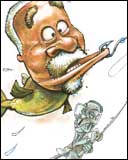
By Jonathan Moyo Mail and Guardian ©2005
11 August 2005
President Thabo Mbeki and his government are desperately trying to limit public embarrassment over the widely publicised political conditions they have reportedly attached to an emergency bail-out for President Robert Mugabe. They should have followed the diplomatic principle enunciated by classical Greek dramatist Euripides - that a foreign ally need not own the land it seeks to help.
In fairness, there is no evidence that Mbeki wants to own Zimbabwe. But there are many indications that he wants to own the solution to the Zimbabwean crisis.
Mbeki's so-called "quiet diplomacy" has now become a very loud affair. For the first time his efforts to broker a solution to the Zimbabwean quagmire are at risk of irretrievably crumbling, with far--reaching consequences for South Africa's capacity to influence regional and continental affairs. It seems Mugabe has once more outfoxed Mbeki in a high-stakes diplomatic standoff over the resolution of the crisis that has dogged the latter's presidency since 1999.
Through his outburst earlier this week against South African calls for him to open new dialogue with the opposition, the Zimbabwean president has opportunistically put himself in a win-win position over the loan debacle. Either his beleaguered Zanu-PF government will ultimately get the loan sought from South Africa, with the usual financial securities but without the reported political conditions attached to it, or South Africa will not grant the loan because of Mugabe's rejection of the political conditions. In the latter case, Mbeki will be exposed as a duplicitous Machiavellian who conveniently waves the pan-African solidarity flag while using methods that smack of imperialism against a desperate neighbour and comrade in need.
The way the political conditionality was reported in the South African media over the weekend did not help Mbeki. There was an authoritative ring to the coverage that the South African government had given Mugabe and Zanu-PF a week to sign up to a series of tough reforms that included talking to the Movement for Democratic Change (MDC), adopting a new constitution with the agreement of the MDC, repealing media and security laws, undoing the negative consequences of the recent land reform programme and holding fresh elections. Clearly, the reports had been planted or leaked by government sources.
In diplomacy, whether quiet or loud, parties committed to the attainment of well-defined objectives in sensitive negotiations do not leak or plant media reports before agreement has been reached.
To do so guarantees the collapse of negotiations. Mugabe's outburst against the reported political conditionality could have been avoided by keeping the tricky aspects of the horse-trading under wraps until the necessary signatures were appended.
Why, then, did the leaks happen? Perhaps those responsible were mischievous elements in, or associated with, the South African government, who did not want the loan deal successfully concluded from the outset. The leak could also have come from the International Monetary Fund, or even Zimbabwean government officials who wanted to ensure that the deal went nowhere because they are profiting from the crisis.
From the outset, the Zimbabwean government's position was that any loan would be a purely financial transaction with the usual guarantees and securities put up by the central banks and treasuries of the two nations, without a political trade-off.
Two recent statements by Mbeki must have reinforced Mugabe's belief that South Africa was on his side and would not try to force political concessions from him. In one case, he said the Zimbabwean government had not undertaken a meaningful land reform programme in the 1980s and early 1990s because African states, through Tanzania's Mwalimu Nyerere, persuaded Mugabe not to scare South African whites before the end of apartheid and the attainment of democracy in South Africa.
As Mugabe has said this all along, this must have been music to his ears.
On another occasion, Mbeki said the debt owed by Zimbabwe was legitimate and had nothing to do with corruption. Debt had started accumulating soon after independence in 1980 when the Zimbabwe government embarked on education and health reforms to redress racial imbalances.
If Mbeki understood these two fundamental issues, Mugabe reasoned, he would be the last to turn a straightforward loan request into a diplomatic trap using the political conditions all Third World countries detest. This is why in his outburst this week, Mugabe referred to Mbeki and the ANC government as "those we expected to know better".
Mbeki's diplomatic initiative to resolve the Zimbabwean political and economic crisis has been conspicuous by its lack of clear and well-defined objectives that can be measured in determining the initiative's failure or success.
What exactly does he want to achieve? What are the objectives of "quiet diplomacy"? Is he trying to bring the MDC to power, to keep Zanu-PF in power, or get Zanu-PF and the MDC to form a coalition government, or what?
"Getting Zimbabweans to resolve their own problems by talking to each other" is not an objective worthy of a diplomatic onslaught. You can get Zimbabweans to talk to each other without agreeing on anything until the cows come home. You can also get Zanu-PF and the MDC to agree to a coalition government where a few MDC leaders become ministers or deputy ministers. This, too, would not lead to any changes in Zimbabwe's national governance or policies, except that MDC ministers would effectively become Zanu-PF.
Some Zanu-PF old-guard elements, supported by some MDC leaders, want Mugabe arm-twisted into accepting the reported political conditions, with a reform time-table that would involve him retiring in 2008 and scrapping presidential elections due then in order to hold them together with parliamentary elections in 2010. At that stage, a new constitution agreed between Zanu-PF and the MDC would come into effect, while 2008 to 2010 would be a transitional period presided over by Joyce Mujuru as caretaker president and Zanu-PF's presidential candidate in 2010.
This too would not resolve the ongoing crisis in terms of the objectionable policies that are bleeding Zimbabwe.
If Mbeki's quiet diplomacy seeks any of the above, the contradictions exposed by the loan debacle are certain to be its graveyard. This is because the Zimbabwean crisis has become wider and deeper than Mbeki's noisy quiet diplomacy can deal with. Zimbabweans have lost all hope not just in Mugabe and Zanu-PF, but also in Morgan Tsvangirai and the MDC. They are looking for an ideological and policy alternative to ensure that Zimbabwe will never again be a colony, never again be a tyranny and never again be a basket case.
Jonathan Moyo is a Zimbabwean MP and Robert Mugabe's former information chief
Moyo: That was then ...
"There is no food crisis in Zimbabwe. There is no food crisis in Bulawayo." -- September 22 2004
"Where the army is deployed, people should not expect a picnic." -- On the deployment of the army against civilians, April 11 2003
"Mercenaries of any kind, whether carrying the sword or the pen, must and will be exposed, and they will suffer the full consequences of the law." -- March 11 2004
"Next time you send us a letter, we will put it in the dustbin and we have concluded that you do not deserve to be taken seriously." -- In a reply to a letter of complaint by Reporters Sans Frontires after the arrest of journalists in Zimbabwe, April 17 2002
"It is absolutely unreasonable to suggest that because we have undertaken to curb violence that there should be no single person throwing a stone in Zimbabwe. We're talking about Zimbabwe, not heaven." -- On pre-election violence, March 3 2002
"Thomas Jefferson said it was better to have newspapers without government. He was very, very wrong. It is far better to have government without newspapers." -- February 1 2002
"If the apartheid press expects us to treat them with kid gloves and allow them to roam around our country, then they don't understand where they are." -- On the South African media, December 19 2001
"When a political party has no loyalty, then it should not expect to be treated fairly." -- On denying media access to the opposition MDC, October 4 2004
"It is clear to anyone who can read the writing on the wall that Zanu-PF is the future." -- July 31 2001
"An article is not a bible where you have written the truth once and for all and for all time, and the environment is frozen. One has to look at the context." -- On his metamorphosis from critic to Mugabe apologist, March 1 2001
"A passport is a privilege and not a right." -- On the withdrawal of passports of government critics, February 16 2001
"If this (the shortages) illustrates the extent of their reliance on South Africa, then it is all good and well," Mbeki is quoted as saying quite omniously for the Mugabe regime.
For long, many Zimbabweans and South Africans have criticised the South African president's so-called "quiet diplomacy." Among them, former Zimbabwe information guru turned opposition MP, Jonathan Moyo waded into the fray fresh from his ignominious fall from the Zanu PF gravy train. Here I republish that article written last year coutersy of Trevor Ncube's Mail and Guardian. I advise that you also read my earlier article, "Lest We Forget..." to give a bit of context as to where Jonathan Moyo is coming from.
What is Thabo Mbeki trying to achieve?

By Jonathan Moyo Mail and Guardian ©2005
11 August 2005
President Thabo Mbeki and his government are desperately trying to limit public embarrassment over the widely publicised political conditions they have reportedly attached to an emergency bail-out for President Robert Mugabe. They should have followed the diplomatic principle enunciated by classical Greek dramatist Euripides - that a foreign ally need not own the land it seeks to help.
In fairness, there is no evidence that Mbeki wants to own Zimbabwe. But there are many indications that he wants to own the solution to the Zimbabwean crisis.
Mbeki's so-called "quiet diplomacy" has now become a very loud affair. For the first time his efforts to broker a solution to the Zimbabwean quagmire are at risk of irretrievably crumbling, with far--reaching consequences for South Africa's capacity to influence regional and continental affairs. It seems Mugabe has once more outfoxed Mbeki in a high-stakes diplomatic standoff over the resolution of the crisis that has dogged the latter's presidency since 1999.
Through his outburst earlier this week against South African calls for him to open new dialogue with the opposition, the Zimbabwean president has opportunistically put himself in a win-win position over the loan debacle. Either his beleaguered Zanu-PF government will ultimately get the loan sought from South Africa, with the usual financial securities but without the reported political conditions attached to it, or South Africa will not grant the loan because of Mugabe's rejection of the political conditions. In the latter case, Mbeki will be exposed as a duplicitous Machiavellian who conveniently waves the pan-African solidarity flag while using methods that smack of imperialism against a desperate neighbour and comrade in need.
The way the political conditionality was reported in the South African media over the weekend did not help Mbeki. There was an authoritative ring to the coverage that the South African government had given Mugabe and Zanu-PF a week to sign up to a series of tough reforms that included talking to the Movement for Democratic Change (MDC), adopting a new constitution with the agreement of the MDC, repealing media and security laws, undoing the negative consequences of the recent land reform programme and holding fresh elections. Clearly, the reports had been planted or leaked by government sources.
In diplomacy, whether quiet or loud, parties committed to the attainment of well-defined objectives in sensitive negotiations do not leak or plant media reports before agreement has been reached.
To do so guarantees the collapse of negotiations. Mugabe's outburst against the reported political conditionality could have been avoided by keeping the tricky aspects of the horse-trading under wraps until the necessary signatures were appended.
Why, then, did the leaks happen? Perhaps those responsible were mischievous elements in, or associated with, the South African government, who did not want the loan deal successfully concluded from the outset. The leak could also have come from the International Monetary Fund, or even Zimbabwean government officials who wanted to ensure that the deal went nowhere because they are profiting from the crisis.
From the outset, the Zimbabwean government's position was that any loan would be a purely financial transaction with the usual guarantees and securities put up by the central banks and treasuries of the two nations, without a political trade-off.
Two recent statements by Mbeki must have reinforced Mugabe's belief that South Africa was on his side and would not try to force political concessions from him. In one case, he said the Zimbabwean government had not undertaken a meaningful land reform programme in the 1980s and early 1990s because African states, through Tanzania's Mwalimu Nyerere, persuaded Mugabe not to scare South African whites before the end of apartheid and the attainment of democracy in South Africa.
As Mugabe has said this all along, this must have been music to his ears.
On another occasion, Mbeki said the debt owed by Zimbabwe was legitimate and had nothing to do with corruption. Debt had started accumulating soon after independence in 1980 when the Zimbabwe government embarked on education and health reforms to redress racial imbalances.
If Mbeki understood these two fundamental issues, Mugabe reasoned, he would be the last to turn a straightforward loan request into a diplomatic trap using the political conditions all Third World countries detest. This is why in his outburst this week, Mugabe referred to Mbeki and the ANC government as "those we expected to know better".
Mbeki's diplomatic initiative to resolve the Zimbabwean political and economic crisis has been conspicuous by its lack of clear and well-defined objectives that can be measured in determining the initiative's failure or success.
What exactly does he want to achieve? What are the objectives of "quiet diplomacy"? Is he trying to bring the MDC to power, to keep Zanu-PF in power, or get Zanu-PF and the MDC to form a coalition government, or what?
"Getting Zimbabweans to resolve their own problems by talking to each other" is not an objective worthy of a diplomatic onslaught. You can get Zimbabweans to talk to each other without agreeing on anything until the cows come home. You can also get Zanu-PF and the MDC to agree to a coalition government where a few MDC leaders become ministers or deputy ministers. This, too, would not lead to any changes in Zimbabwe's national governance or policies, except that MDC ministers would effectively become Zanu-PF.
Some Zanu-PF old-guard elements, supported by some MDC leaders, want Mugabe arm-twisted into accepting the reported political conditions, with a reform time-table that would involve him retiring in 2008 and scrapping presidential elections due then in order to hold them together with parliamentary elections in 2010. At that stage, a new constitution agreed between Zanu-PF and the MDC would come into effect, while 2008 to 2010 would be a transitional period presided over by Joyce Mujuru as caretaker president and Zanu-PF's presidential candidate in 2010.
This too would not resolve the ongoing crisis in terms of the objectionable policies that are bleeding Zimbabwe.
If Mbeki's quiet diplomacy seeks any of the above, the contradictions exposed by the loan debacle are certain to be its graveyard. This is because the Zimbabwean crisis has become wider and deeper than Mbeki's noisy quiet diplomacy can deal with. Zimbabweans have lost all hope not just in Mugabe and Zanu-PF, but also in Morgan Tsvangirai and the MDC. They are looking for an ideological and policy alternative to ensure that Zimbabwe will never again be a colony, never again be a tyranny and never again be a basket case.
Jonathan Moyo is a Zimbabwean MP and Robert Mugabe's former information chief
Moyo: That was then ...
"There is no food crisis in Zimbabwe. There is no food crisis in Bulawayo." -- September 22 2004
"Where the army is deployed, people should not expect a picnic." -- On the deployment of the army against civilians, April 11 2003
"Mercenaries of any kind, whether carrying the sword or the pen, must and will be exposed, and they will suffer the full consequences of the law." -- March 11 2004
"Next time you send us a letter, we will put it in the dustbin and we have concluded that you do not deserve to be taken seriously." -- In a reply to a letter of complaint by Reporters Sans Frontires after the arrest of journalists in Zimbabwe, April 17 2002
"It is absolutely unreasonable to suggest that because we have undertaken to curb violence that there should be no single person throwing a stone in Zimbabwe. We're talking about Zimbabwe, not heaven." -- On pre-election violence, March 3 2002
"Thomas Jefferson said it was better to have newspapers without government. He was very, very wrong. It is far better to have government without newspapers." -- February 1 2002
"If the apartheid press expects us to treat them with kid gloves and allow them to roam around our country, then they don't understand where they are." -- On the South African media, December 19 2001
"When a political party has no loyalty, then it should not expect to be treated fairly." -- On denying media access to the opposition MDC, October 4 2004
"It is clear to anyone who can read the writing on the wall that Zanu-PF is the future." -- July 31 2001
"An article is not a bible where you have written the truth once and for all and for all time, and the environment is frozen. One has to look at the context." -- On his metamorphosis from critic to Mugabe apologist, March 1 2001
"A passport is a privilege and not a right." -- On the withdrawal of passports of government critics, February 16 2001
Thursday, January 26, 2006
Why are we always running late?
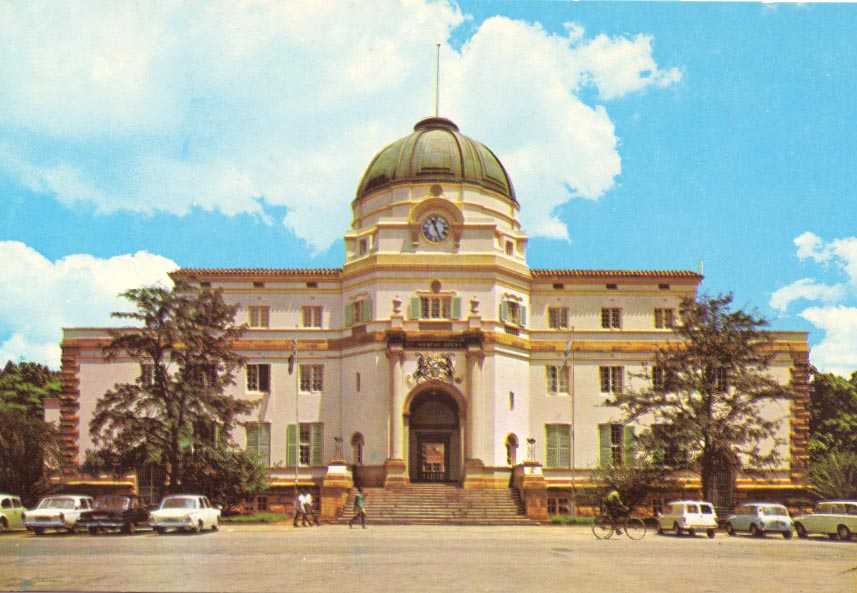 There is one thing that we Zimbabweans are so averse to, and that is keeping time. I’ve met dozens of people who are always running late (and that, of course includes me.) Many of them have apparently never heard of that great invention called the watch.
Among those who have received news about the technological breakthrough, some consider a watch nothing more than a piece of jewellery. If it didn’t display the time, they wouldn’t care, as long as it displayed important information such as "Seiko" or "Rolex."
Most of us have never owned a watch. We think they can do without one, even though we don’t work for the civil service. If I have an important appointment, I try to keep track of time by looking at the sun. If not, I rely on people around me. I last wore a watch in 1996 when I was overseas where time is money. The idea was to sell it immediately I back home. You see, here, money is money. Never forget the danger of being mugged as well.
Of the public clocks that we have here in Bulawayo, its only the one at the City Hall that works most of the time. The one at the Main Post Office has never worked for as long as I can remember. I need not mention the one at the High Court. I’m sure it got stuck at that time when some notorious criminal was hanged ages ago. In fact, there are some who believe that Bulawayo is the city where time stood still. If you compare us to Harare interms of development, that is.
Women are classic time wasters. If one is expected to be at a function at 6pm, one would assume that if you are ready to leave before 5.30pm, you are bound to get there right on time. But the woman has only just entered the bathroom, which means that you still have enough time to read a 200-page novel. Most women in their defence are much better at keeping time than many people I know. And I say that not just because I hate sleeping on the sofa.
People from certain countries seem more inclined to be late. For example, if a Swede invited a Zimbabwean and an Indian to lunch at 1pm, the Zimbabwean will arrive at 3pm, unless he gets a lift from his Indian friend, in which case they will both arrive just in time for supper. And neither of them will act as if anything went wrong.
"Apologise? What for? We got here on the same day!"
My friends at our social soccer club Amavevane have tried to adjust to this chronic disease. For example, if we want to play social soccer at 11pm we ask team members to assemble at 9am for them to arrive at 11am, ensuring that the game will start promptly at 1pm. It's far much better than buying them expensive watches.
However, we will never beat the National Railways of Zimbabwe’s shoddy record of constantly not keeping to their timetable. With such a record, who needs a timetable? The night train leaves late as a matter of principle. Never mind the fact that it arrives in Harare a full day later. Remember, why apologise, at least it arrives this century. The chaps at the NRZ perhaps may rest assured that they fare better than Air Zimbabwe, whose planes never seem to take off.
I have bosses who are very irritated when meeting starts late. Never mind the fact that very little if anything is achieved at these marathon meetings, as long as it starts on time, everything is fine. Perhaps I should buy myself those huge clocks to hang around my necks as a reminder that I should not waste other peoples’ time. In any event, which mugger would find a Zobo clock attractive?
Not just another can of worms
 Hurrah, they are here! My favorite dish has crawled back onto my late after an absence of close to two painful years! I had a fried plate last night and look forward to the cooked creepy crawlies tomorrow! Wanna puke? Don't do it here my dear friend, but then it could be worse. Take those who choose to feast on crab, snail (or is it escargot?) horse, snake, insect, frog, grub, lizard, rat, bat, cat, dog, grasshopper, octopus, tortoise, seal, lobster, prawns, eel, or monkey. Me, I just go for mopane worms.
The caterpillars of the anomalous emperor moth Imbrasia belina, mopane worms are a culinary sensation here in Zimbabwe and the rest of Central and Southern Africa. They are named after the Mopane, a tree that is common in semi-arid areas whose big clover-like leaves are what the worms feast on during metamorphosis. For the poverty stricken people of the region, the Mopane worm, or amacimbi in the local language, is manna from heaven.
The guts are removed through squeezing and the worms are then boiled and left for a day to dry out in the sun. Once dried, they can be used at any time for cooking and the result is a juicy and salty treat.
The Mopane worm has all but replaced traditional agricultural produce as a source of nutrition and income. From the onset of the rain season, when the Mopane forms its telltale leaves, the worms emerge from their cocoons and crawl down the tree. So do worm gatherers from all corners for the harvest.
The worm catching is in itself a spectacle to behold. Scores of people are fanned across the sparse bushes, carrying containers of every conceivable shape and size, filling them to the brim with nature's bounty. The worms are a delicacy mainly among the black population. Connoisseurs say that there are more than 20 ways to prepare the mopane worm dishes. Take them fried as a snack, cooked with tomatoes and onions, boiled or simply dried (See recipes below.) One enterprising entrepreneur has even contemplated canning them.
Whichever way they are prepared, health experts wax lyrical about the dietary advantages of Mopane worms. They more contain protein and roughage than ordinary oats. Posters at health centers in the rural areas recommend the worms as supplement for pregnant women and those living with HIV.
There are those among us who would only eat Mopane worms at gunpoint. The reason is purely psychological. Admittedly, it takes one some time to acquire the taste. One just has to get over the initial phobia that associates the worms with other creepy-crawlies, experts say. In some cases this is blamed on adults who discouraged their children from eating the worms at an early age. This is in spite of the fact that the adults themselves grew up on a diet of worms.
The edible worms are just irresistible in a continent where hunger and famine stalks the land. Their respect knows no borders. They can be found gracing the dinner tables of many households in South Africa, Zambia, Namibia, Botswana and Mozambique. In the Democratic Republic of the Congo (DRC) demand is outstripping supply with a kilogram fetching as much as US$5.
However, there are parts of the continent where the worms are, let’s say, despised. During a trip to Uganda in 1994, the writer attracted strange looks from his hosts when he tried to convince them that there was absolutely nothing wrong with having Mopane worms for dinner. A glossy magazine article that I presented as evidence, including graphic color photographs, only made things worse. In freezing Sweden, Scandinavian hosts could hardly disguise their shock when their Zimbabwean guests attempted to allay their fears describing in graphic detail how good the grubs tasted like. What else besides these awful things did these people eat, they wondered.
Back in Zimbabwe, hundreds of people flock to the southern regions from all corners to get a piece of the action. Predictably, politicians have also waded into the fray. Here, anything that smells of money attracts politicians like flies to a carcass. Government officials complain about the exploitation of poor rural villagers by unscrupulous traders who peg the price at 500,000 Zimbabwean dollars (US$4) for a 20-litre bucket. The going market rate is US$5 a kilogram in the DRC.
Local authorities in areas where Mopane worms are harvested have been vigorously campaigning for a ban on 'outsiders' cashing in on what is regarded by them as an exclusive resource. The issue has turned political and emotions run high at harvest time when scuffles break out between villagers and traders from the city. In Botswana, landowners charge the gatherers a fee for both camping on their property and harvesting.
These traders are sometimes accused of showing little respect for local customs and in turn, the environment. They needlessly chop down trees and desecrate sacred traditional shrines. At least one local authority is issuing licenses to approved traders while others insist on the locals doing the picking themselves and later selling the worms at set prices.
Unfortunately, at the height of the worm-picking season, poor and desperate villagers accept anything they are offered in return, from bags of corn meal, cups and plates to items of clothing in exchange for buckets of the worms. This has made them easy picking for unscrupulous buyers who are out to make a quick and easy buck.
Mopane worms are the salvation to an economically depressed and poverty stricken region. For a continent always reaching out its hand for assistance, the worms offer an opportunity for its people to improve their wretched lives. And they are not going to let any outsider take away their God given right.
RECIPES
Mopane Worm Stew
Ingredients: Dried mopane worms, Tomato (sliced), Onions (chopped), butter or cooking oil, chili sauce (to taste,) salt, pepper and garlic salt to taste Method:
Soak mopane worms in water until soft.
Fry onions in butter or cooking oil.
Add rest of ingredients and cook over slow heat until tender.
Serve with isitswala or sadza (pap or maize meal.)
Method 2
Ingredients 1 cup of dried mopane worms, 1 onion, chopped, 2 green peppers, sliced, 6 tomatoes, diced, 1 tablespoon curry powder, and ½ litre water.
Preparation Wash the worms and boil them for 30 minutes. Drain, then add the rest of the ingredients and simmer for about an hour.
Mopane worms can also be soaked then fried to a crispy TV snack. Yum, yum, yum!
Tuesday, January 24, 2006
Waiting for a miracle?
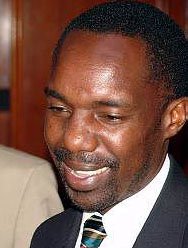 It was in the twilight of the year 2001 that I sat with the chaps in the Dog Section of Selbourne hotel. So called because of the barred windows that only allow those outside a cursory glimpse of what goes on inside. The inhabitants have the privilege of scanning the landscape and the creatures that populate it - including various species of the opposite sex who will be totally unaware that they are being watched. ‘Oggled’ is the correct word for it.
All this is beside the point. The Dog Section refers to the King’s Head bar, melting pot of every opinion about every subject under the sun. The characters therein are as eccentric as the shades of opinion they are wont to defend. So the subject of the political dispensation in Zimbabwe was not so far fetched. Here was bound to be differences. In fact a wide chasm was soon to appear. On the one side where those who were optimistic that Zimbabwe had reached rock bottom and that the only way was up.
The Constitutional Referendum was all but a few months away and we were confident that the people would reject it. Not so much because it was being driven by Zanu PF, but because even at face value, it was an obnoxious piece of paper. The other end of the scale was bent on pooping the party, saying that the rejection of the constitution would be a big mistake and a missed opportunity for Zimbabweans to turn a new leaf. Up until today I am convinced those that supported that school of thought new something that the rest of us didn’t.
Six land and arduous years later, after the war vet pensions, land invasions, The DRC war and Jonathan Moyo we are far worse off than we ever imagined. We blame the government of gross mismanagement and they blame Tony Blair and George Bush. Evidently the chasm is on how we will ever get out of this rut. In fact, most of the population has lost hope that solution will ever come out of the current crop of leaders who are not only clueless but they seem not to give a damn.
Blame storming will get us nowhere. This is why I have resolved to take a different course of action in 2006 and beyond. I have stopped complaining about what his government is doing to me and the rest of us, that is, screwing us into the ground. I avoid answering greeting in the negative. I will look for opportunities where others see none. I refuse to wallow in despair and dejection. I have a talent, nay, talents that I can use to lift myself, family and community from the rut. The reality is that my patience is wearing thin, I hit 42 this year, and clearly time is not on my side.
While the rest are waiting for a miracle that may never come, I will create that miracle. You will know that I am there, making a difference, getting fabulously successful and wealthy and having a good time while doing it. Love or hate me, I will be in your face…permanently. Just you watch me. God help me.
Tuesday, October 04, 2005
Light At The End Of The Tunnel?
 We said we would never get into the morass we are in right now. How wrong we were! The Zambians are laughing at us and so are the Congolese! It never seizes to amaze, how Zimbabwe continues to break records in as far as misrule is concerned. Why have we allowed ourselves to be the laughing stock of the free world? Zimbabwe is now a case study in how to run a once stable economy into the ground and blame it on everyone but us. However, there seems to be a glimmer of hope.
Zimbabwe could take at least 24 months to recover if things normalized tomorrow. So says economist Professor Tony Hawkins of the University of Zimbabwe (UZ). The venerable don believes there is light at the end of the tunnel as long as the authorities address economic fundamentals as a matter of urgency.
Commenting on the prospects of recovery, Prof Hawkins gives the examples of the same Zambia and the Democratic Republic of Congo whose economies have rapidly come out of the doldrums in a short space of time. In terms of investment, it would be wise to bank on mining, tourism, Health care and utilities, sectors which all exhibited a high potential of good medium term recovery. Manufacturing, agriculture and probably financial services faced tougher prospects.
Prof Hawkins, a lecturer in UZ’s Faculty of Commerce, puts in figures what we all already know, that all the sectors are depressed and that the Zimbabwe dollar is in freefall predicting that the official rate will drop further to Z$50,000 to the US dollar by Christmas and probably $100,000 to the US$ by December, 2006. This is assuming that inflation rises by 15% per month for the rest of the year. Effectively this means that people are poorer now than they were in 1970.
Structural factors and not the drought are the major cause of economic decline, says Prof Hawkins, a fervent critic of the government’s tinkering with the economy.
“This is the seventh year of decline that has seen the Gross Domestic Product go down to 5%. GDP will decline by a further 10% by the end of the year and that for as long as agriculture, once the mainstay of the economy failed to recover, exports will continue to decline. Investment therefore cannot take place in a high inflationary, declining economy,” he says.
Professor Hawkins draws similarities to what happened in 2000 when property prices doubled, the parallel market increased five-fold and price controls were revived. Massive structural changes have indeed taken place particularly the demise of large-scale agriculture, de-industrialization, shifts in demographics and market segments. This presents industrialists with challenges that point to a sink or swim scenario.
In order for them to stay afloat, industrialists will have to find an answer to China’s new low cost, low price, and low wage approach. Secondly, they have to take cognizance of the fact that the middle-income group has shrunk significantly either through migration or down to the poor sector of the population. At least 55% of the population is living on US$1 a day. This means that the lower income group has expanded indicating that in order to survive, manufacturers should downgrade their goods in order to target this group. The alternative will be to cater for the rather static upper bracket of ‘fat cats’ with mostly imported, high price luxury goods.
Prof Hawkins says that the best prospects come from what he terms ‘Demand Innovation.’ There is need for industrialists to ‘think outside the box’ and redefine their markets by finding new ways of doing things, making products and providing services in addition to meeting demand. This points out to new collaborative opportunities where local companies should explore production links with firms in South Africa in the areas of research and development.
Therefore, focus should be on soft technologies of human capital; technology and knowledge transfer rather than hard ones. However, in an economy as volatile as ours with an equally unpredictable leadership, the light at the end of the tunnel could well be that of a speeding train bearing down on us.
Tuesday, September 27, 2005
If you are lazy you better read this
 WORK is a four-letter word. This holds true for those of us who are effort disinclined, or put more simply, lazy. But have you ever felt you are working too hard, for too long, for too little? Well before you pour out your grief, you have to contend with those people who give far less than what they get in the form of remuneration. They are called ‘Bosses.’ They are likely to label you as lazy when you may be exercising your rights in ‘rationing production.’
We must admit though that there are some who spoil things for the rest of us by being blatantly lazy. They deserve to be frozen, downgraded or better still, ‘right-sized, yes, I mean retrenched!
Fortunately there seems to be a way around this problem. Psychologists and experts in the art of deception (cheats) have studied activities that on the surface give the impression that one can be a sure candidate for being ‘Worker of the Year’ when in actual fact they are just lazing around. Here are tried and tested strategies for creating the false impression that one was ‘working hard’. Keep them confidential. An over enthusiastic former colleague forwarded them to his boss’s e-mail address by mistake. As they say, he is now history.
But then I digress. One should never walk down the corridor without a document in his or her hands. People with documents in their hands look like hardworking employees heading for important meetings, when they are not. Those with nothing in their hands look like they're heading for the canteen. When holding a newspaper in your hands, look like you're heading for the toilet. Above all, make sure you carry loads of stuff home with you at night, thus generating the ruse that you work longer hours than you actually do. Though, of course, it would be hard to justify a claim for those extra hours.
This is one is my favourite… use computers to look busy. Any time you use a computer, it looks like "work" to the casual observer. You can send and receive personal e-mail, calculate your finances and generally have a blast without doing anything remotely related to work. These aren't exactly the societal benefits that the proponents of the computer revolution would like to talk about but they’re not bad either. When your boss catches you, and you “will” get caught, your best defense is to claim you're teaching yourself to use new software, thus saving the company valuable training dollars.
Top management can get away with a clean desk. For the rest of us, it looks like you're not working hard enough. Build huge piles of documents around your workspace. For this reason a friend’s office looks as if it was on the path of Operation Murambatsvina. To the casual observer, last year's work looks much the same as today's work; it's volume that count. Pile them high and wide. If you know somebody is coming to your office or cubicle, bury the document you'll find halfway down in an existing stack and rummage for it when they arrive.
Never answer your phone. People don't call you just because they want to give you something for nothing. They call because they want YOU to do work for THEM. That's no way to live. Screen all your calls through reception. If somebody leaves a message for you and it sounds like impending work, respond during lunch hour when you know they're not there. You see, one can never tell what time the message was left. It will look as if you're hardworking and conscientious even though you're being a devious mampara.
If you diligently employ the method of screening incoming calls and then returning calls when nobody is there, this will greatly increase the odds that the caller will give up or look for a solution that doesn't involve you.
One should also always try to look impatient and annoyed to give your bosses the impression that you are always busy. Speak fast, and stand at the door, ready to rush back to your office. Even pick up the phone when he comes into your office and look engrossed in a business call that gives the impression that it will result in millions of dollars flowing into the company account.
Appear to work late. Always leave the office late, especially when the boss is still around. You could tackle magazines and novels that you always wanted to read or surf the Internet but had no time until late before leaving. Make sure you walk past the boss's office on your way out. Send important e-mails at unearthly hours (e.g. 9:35pm, 2:05am, etc.) and during weekends and public holidays and make sure the boss sees the copies, with the times highlighted for extra effect.
“Creative Sighing for Effect” strategy also works wonders. Sigh loudly when there are many people around, giving the impression that you are very hard pressed. It is not enough to pile lots of documents on the table. Put lots of books on the floor. You can always borrow from the library. Thick computer manuals are the best. This is known as the ‘stacking’ strategy.
Always make sure you build on your vocabulary, or more accurately, superfluous wording that can be thrown around liberally. Sounds more like a political speech, a lot of hot air signifying totally nothing. To achieve this, read up on some legal journals and pick out all the jargon. Use it freely when in conversation with bosses and it will sure knock them for six. They won't have to understand what you say but, ipso facto, you will surely sound impressive.
Finally and most importantly, a friendly warning: don't forward this to your boss by mistake. What do you mean YOU are the boss?
Glossary
Operation ‘Murambatvina’
(Lit: Operation Reject Filth in the Shona language). An ill thought out operation by the Mugabe government in Zimbabwe were thousands were made homeless as the state went on a orgy of destruction in the urban areas on the pretext that they were cleaning up. Coincidentally, it is the urban population that has consistently voted for the opposition Movement for Democratic Change in successive parliamentary elections.
Mampara
Vernacular for a very irresponsible person. The South African broadsheet the Sunday Times pillories mamparadom in politicians and celebrities culminating in a ‘Mampara of the Year’ award. Zimbabwe’s Robert Mugabe and former government spin-doctor Jonathan Moyo have been past recipients of the award.
Friday, August 05, 2005
Lest we forget...
 Jonathan Nathaniel Manheru ‘Mzala Joe’ Moyo, former government wizard of spin, committed political hara-kiri by going independent in Tsholotsho in the last elections or so we thought. Arriving at the nomination courts 15 minutes before their closure, Moyo virtually handed in a political suicide note in the form of his nomination papers much to the delight of the crowd that thronged the court buildings.
The former junior minister’ fate then reminded one of those Humpty Dumpty rhymes – “All the Tsholotsho chiefs’ donkeys and all the chiefs’ men, could not put the egg-shape headed professor back again!” The man who claimed to have saved the Party (meaning Zanu PF) from sinking into oblivion was reeling from its venom. But then, Moyo went on to defy all odds to grab the Tsholotsho seat as an independent! Which says a lot about the people from that region. The rest as they say was history.
One thing became crystal clear; that Jonah’s coterie of praise singers and bootlickers in the state media would certainly get what was coming to them. The Chronicle’s Steve Ndlovu was first to be shown the door. Others are being lined up at the door. It’s a matter of time.
It was Peter Hobday, broadcaster and former presenter of BBC’s Today programme who once said, “Journalists, it is alleged, are an egocentric, single-minded, cynical, unforgiving bunch who have only one wish in life and that is to dig the dirt and ruin reputation, regardless of the facts.” He took the words out of my mouth only that he forgot to replace the word ‘journalists’ with ‘Special Project Editors” that group of hair-brained megaphones pretending to be investigative scribes.
One can safely conclude, without batting an eyelid, that Zimpapers under Jonathan Moyo was his longest suicide note in the history of politics. Now he is the sell-out, a title only reserved to the piss of the earth in ruling party definition. His is persona non grata in their pages. Its as if he never existed. Surprisingly, the very independent press that he was instrumental in oppressing is falling over each other to grant him space. It is one of life’s greatest ironies if you ask me.
We will definitely see some changes at Zimpapers with some editors looking for new accommodation in Dangamvura, Macheke or even Domboramavara. I couldn’t care less if they were shipped to Siberia. Out too will be the acid pens of fifth columnists, whose diction was suspiciously Jonathanic in shape and form, libelous, sacrilegious and downright vulgar. No journalist with all his screws in the right place would ever have dared put his signature to such drivel.
We hoped that Moyo’s departure would save us from some of the most moronic brand of reporting this side of the galaxy. He of ‘rocket scientist’ fame will be remembered by many of his uncanny ability to churn out clichés by the bucketful. They crept into every editorial in the state media to the extent that one suspected that he that he personally penned every one of those stories. The man had such stamina.
But lo and behold we are saddled with the not so Bright – aaah! - Matonga. The wet behind the ears deputy minister of Disinformation clearly needs an intelligent interpreter to decipher for us all those aaaahs and uumms that punctuate his speech. And Rueeeben Barwe is still there in his breathtakingly stupid glory. The man who took bootlicking to unprecedented depths is still groveling for his supper.
We in Zimbabwe are all in agreement on the urgent sanitization of that collection of mediocrity masquerading as a broadcasting company, Zimbabwe Broadcasting Holdings. Perish that awful experiment in spacing radio stations to give the impression of opening up the airwaves, or that perennial excuse called National Television which has been ‘coming soon’ for ages.
And the public should be happy too, that they are rid of a man created so much resentment and anger for the party through his acts in restricting their behaviour. In media studies, psychological reactance theory refers to legacy of the Moyo that was a “deliberate and systematic attempt to shape perceptions, manipulate cognitions and direct behaviour to achieve a response that furthers the desired intent of the propagandist.” - with apologies to media lecturer Kevin Moloney.
Perhaps happy days are around the corner. I hear Minister for Policy Implementation and former disk jockey Webster Shamu commissioned an inquiry at the national broadcaster whose juicy parts have just been leaked. It talks of carpet interviews, incompetent newsmen (as if didn’t we know), the dubious and economically bankrupt 100% local rubbish (sorry) content policy at Power FM and many other things that would make the at the back of your neck stand up. We await with bated breath perceived changes at Dead BC and the state press.
Wednesday, August 03, 2005

ARROGANCE PERSONIFIED
I have published this week a picture of me sitting on a pile of stones. This intriguing yet symbolic photograph was taken in Sweden at a place called Kungsgraven (King’s Grave) sometime in 1995. The epitaph “Sitting on Zimbabwe Ruins” is poignant in the sense that it portrays the state of my beloved country at this very moment in time. To say that we are sitting on the ruins of a once admired and beautiful country is an understatement. We are well and truly “fucked,” to excuse the hard language, because there is no fairer description.
President Mugabe has just returned from a much-publicized begging jaunt in China, them being just about the only friends we have left in the whole wide world. The Libyans lost patience with us a long time ago and the oil pumps dried up immediately afterwards. We are not privy to the information on the thousands of acres of land the North Africans were plied with in return for barrels of motion lotion. The rumour is that Mugabe, also known as uKhulu (which is a polite alternative to ‘geriatric.’) to some of us, has promised the Chinese all our platinum and copper reserves. I said it was a rumour.
Cuba has little else to offer other than half-baked doctors. African states, poor as they are, can do little except cheer from the sidelines…as long as the pariah of the world does not set foot in their countries and smear them with whatever is keeping western donors as far away as possible from our doorstep. Besides these two, who else is friendly? South Africa? Not on your life! Mbeki is stocking the fire because he is gaining immensely from our demise. They call it “Cash Cow” diplomacy.
The words of the South African president at the national land summit in Johannesburg at the weekend and quoted in the local press gave very little comfort to us Zimbabweans. It displays the bankruptcy of African leadership. How can he stand up and defend the indefensible, Zimbabweans ask? We thought that was the job of clueless Zimbabwean government ministers and our stuttering state propaganda machinery.
I quote, “ The debt problem in Zimbabwe is the result of the demand to meet the urgent needs of the people after liberation, the Government of Zimbabwe spent more money than it had.” He was implying that it was not because of political and economic mismanagement. One would be forgiven for thinking that Mbeki received the speech straight from our own spin-doctors. If we were to give him the benefit of doubt, we could say perhaps he was misquoted.
Let’s get back to Ukhulu (Grandpa) who came from China with a basket full of…nothing. Zimbabwe, as you know by now, was the breadbasket of the region. Sadly, we are now a basket case. The painful part is that our dear leaders are in a state of denial. They are not responsible, the say, for the morass we find ourselves in. If you have studied management, I am sure that you have come across somewhere where it says that the hallmark of good leadership is acknowledging when you are wrong.
Tuesday, July 19, 2005

WHY THE NAME GRAFFIKS?
I think I owe some people an explanation. If you are logging in for the first time then it’s a warm welcome. I have been spamming the SMS domain with this web address with the hope that through this blog I will one day be famous. So you are part of a chain that will inevitably circle the globe…and I will be stinking rich by then. But then I digress. Why Graffiks On the Net? Why the name Graffiks in the first place? The profile on the right (mug shot included) does little justice in explaining this mystery.
Well, the nickname ‘Graffiks’ was self-coined. In other words by normal standards of nicknames it breaks convention. By definition a nickname is a short, clever, cute, derogatory, or otherwise substitute name for a person or thing's real name. As a concept, it is distinct from both pseudonym and stage name, although there may be overlap in these concepts. That’s the academic definition by the way. In simpler terms it is the first name by which one is commonly called, differing from the formal name one was given at birth, usually belittling the person.
But as we all know, a nickname is not always flattering and that the owners usually resist them. The more they resist it, the more it tends to stick. I did have a host of uncomplimentary nicknames once. I was called Lolo, which sounded like lollipop. Then there was Leox Beef, then 'Lenyosi' then…the list was endless. The worst nickname I had was being called ‘mistake.’ The chap who ‘chested’ that one on me regrets doing so to this very day. Which explains why it never really clung.
Anyway, I had the rare privilege of choosing a nice nickname for myself. The story goes thus…Once upon a time when stones were still soft (in 1985), I was admitted into the University of Zimbabwe as an undergraduate student. University was a blast with plenty women and alcohol flowing in its treelined avenues and hotel like residences. I was nevertheless determined to succeed as we all were…with a few exceptions of course. There were those who came to have a peek, like the late Mike Munyati (Lord bless his soul) who nearly took a lifetime to complete his first degree only to give up. And those who wanted to make a loud statement like Arthur Mutambara (later referred to as ‘tukitsi’ by uKhulu Bob) who was forced to literally 'fly' out of his second floor room window because of his reckless utturances. At UZ we leant that there was freedom of speech but Mutambara found out to his peril that there was no freedom after speech.
In the heat of the moment some students got together to start ‘Focus” a students' Magazine. By the way I forgot to tell you that I am (was) a gifted artist. This might shock some of you but when I was in Grade One and Two, teachers used to fight over me to draw illustrations for the Radio Lesson with Miss Charles (with Tendayi, Jane and Moses.) Sad to say I totally missed out on those intriguing episodes where Miss Charles would say: “Alright children, say this after me, ‘The bucket is full’” And a bell would ring (ngqing!) so that we would, in chorus fashion, follow what she had just said.
Needless to say, my command of the Queen’s language was already light years away courtesy of my enterprising father who plied me with cartoon magazines and books bought from the auction and television of course. That did not preclude those South African comic books with weirdly characters like ‘Chunky Charlie’, 'Devil Bat' and 'She.' Chunky Charlie was known for his uncanny ability of solving crime and also retrieving an assortment of items from inside his huge coat that included (and not in that order) a loaf of bread (his favourite meal), a bicycle and at one time a car!
Devil Bat was a vampire, that's enough said, And ‘She’ was this female superhero wearing an Afro wig (a fashion statement of that time) who had a knife (an Okapi) that could fly. (Those of you in the know should be aware that an Okapi knife in the unofficial traditional weapon of the Ndebele.) I should add here that the dialogue in those comics was a bit on the daft side. But for a Grade one or two pupil, it was very sufficient. One expression coined in those comics of old that made its way into everyday language was, “What the?” I was later to discover that it was short for that very vulgar African American expression, “What the f*#k!”
But yet again I digress. The story is about the nickname Graffiks. The guys at college (that is what we called UZ then) who formed Focus magazine included Tawana Kupe (now a famous don at Wits University) Lawrence Tshuma (now late) Titus Moetsabi (later known ominously as Moetsabi Moetsabi, a poet of note), Lovemore Banda (later Lovemore Blunder of ZTV fame), Thomas Deve (he of the Daily News and MISA) and others who I forget ... and mina of course.
The story goes… that we decided on some division of labour. Someone had to do the artwork which included cover design, illustrations and of course the cartoons. I volunteered and the rest they say is history? Not quite! I was not comfortable in revealing my identity yet. Some of the cartoons were quite acerbic. People on campus had the tendency of taking the law into their hands. And blows were traded liberally like mopane worms in the DRC.
I imagined an Arts company and what it would be called. I though of how my name Lenox could be disguised. Being brought up on a diet of Student’s Companion, it did not take me long. Lenox is from Leo, which is Lion. A lion denotes bravery and many other things. I then though of appending the word ‘graphics’ but it somehow looked too plain. You see I had this Rasta-reggae background whose stock in trade was turning the Queen’s language upside-down.
On campus, I was a member (and later secretary general) of an organization known as the Society for Afrikan Studies. We were decidedly African in outlook but labeled mbanje (marijuana) smokers buy others. Well, Zimbabwe is a free country and everyone is allowed to have his own opinion. In the event I then decided to ‘Afrikanise’ the word and Graffiks with two f's came up. So below every illustration, cartoon and design (I also did T-shirts and logos) I produced was appended the tag ‘Lion Graffiks.’
Be that as it may, my identity was not secret for long. When the magazine was banned long before the Daily News (it had to be because it caused the authorities sleepless nights) I continued drawing cartoons and sticking them outside my room door. I enjoyed listening to the guffaws and comments as a steady flow of students oggled at the latest caricatures. Comments like, “Ende mufana uyu anopenga chayizvo chayizvo - uyahlanya sbili!” (He is very very crazy) were quite common.
It so happens that I was also an above average soccer player, packing a wicked defense for Burning Spear Football club in the University Soccer League. We scooped the league and Chancellor’s Cup on countless occasions. My teammates shortened my tag to ‘Graffiks’, which in a strange sort of way described the way I ploughed into the opposition’s strike force and won many an aerial tussle with my trademark explosive clearences. The multitude of fans (among which the female sex were a notable component) would shout ‘Graffiks!’ each time I performed a heroic (read suicidal) sliding tackle. I have enough evidence to show from those heady days of short lived fame. At least I came out of it with a wife!
So there you are, to this day my close pals at Amavevane Social Football club and elsewhere still call me by that name and I can bet you most are amazed as you are of its origin. Now that explains Graffiks On the Net which literally means Lenox on the Internet. Now that you know, lets get on with life. Oh, you might ask, what ever happened to my artistic talent? I usually explain it this way: At UZ I was sufficiently and persistently inspired to graffikally express myself...but when I went out into the real world that was and still is so depressing, silly and so forth and so forth, I then resorted to writing silly columns in newspapers. Which also explains the existance of this silly blog. Silly me.
What is a Blog, by the way?
Blog is short for weblog. A weblog is an online journal that is frequently updated and intended for general public consumption. Blogs generally represent the personality of the author or the Web site. Which is my case should be called a silly log. With apologies to the Ministry of the Environment and the Creator.
Monday, July 18, 2005
WILL I WRITE FOR THEM AGAIN...EVER?
I just had to write about what is going on in Zimbabwe. Aside: The newly appointed editor of the Chronicle, Makuwerere Bwititi phoned me two weeks ago, just barely a few seconds after he had taken the hot seat. He wondered whether I would revive my "On The Lighter Side Column" for his paper on Saturdays. My instinct was ask to see the colour of his money first. But then I thought: Let me ask him what had really changed at the Chronicle apart from a brief episode of musical chairs so typical when new Ministers of Information took over after a reshuffle.
Heads are know to roll and this time is no exception. Jokonya has replaced Jonathan (Moyo) and he is being touted as a liberal in as far as excessive media control is concerned. Him being a former diplomat and all that jazz. Personally I am yet to see a noticeable mellowing of sorts in the State Media apart from perhaps a dilution of the 100% local music content demanded during the Hondo Yeminda days.
The Chronicle is as rabid as ever. Writing for them would be endorsing the status quo and that would be against the best of my conscience. It is for similar reasons that I have constantly turned down overtures from SFM to revive Afro Jazz on Thursday show on radio. I would rue my show emerging after that steady stream of propaganda masquarading as news.
The Chronicle continues to issue blinkered opinion pieces and cliche infested political commentary passing off as journalism. Take for example Zimbabwe's long running fuel crisis. Nowhere do you see an article putting the powers that be to task about solutions to the problem. Instead, you read about 300 million litres of fuel "currently on the high seas" on its way to quench a patched and paralysed transport sector. Never mind the fact that Zimbabwe needs at least 2 million litres a day just to break even.
One cannot help but imagine a situation where that consignment is highjacked and diverted to Sri lanka as happened some years ago with a some shady amarments that were destined for the Indian Peninsula. They ended up in the gleeful hands of the Tigers of Tamil guerrilas who than proceeded to use them to good effect against the intended receipients! It would not be beyond the state media to cook up a story about the British fleet diverting those supplies to Papau new Guinea for all we know.
I also remember quite vividly MDC Secretary General Welshman KaNcube wondering why I was still broadcasting. adn't I heard of a thing called blacklisting? Not wanting to spent the rest of my life wondering in the confines of my garden unable to move anywhere, I promptly resigned. Never mind the fact that it would have been a matter of time before Jonathan Moyo and his cohorts forced the Hondo Yeminda diet of songs down my Jazz programme's line up.
My brief stint with the managerially-challenged but now banned "Weekly Times" at the beginning of the year should have firmly placed my name at the top of Mahoso's most wanted list. But no. Here are guys from the state media falling over themselves to get me back. I will post my diatribes from that brief era of protest journalism for you to make your own judgement.
I would rather be poor and insignificant, than be well known but revilled. Just ask Jonathan Moyo how he feels now. So the next time you ask me why I no longer write or broadcast...now you know.
Thursday, July 07, 2005

THERE WAS A RAT IN OUR KITCHEN... ONCE
I don’t know what you think but having a pet, a vicious one at that is a necessity nowadays. That would obviously translate into the canine variety…in other words, a dog, very big dog for that matter. The more sadistic ones would rather keep Lions. With thieves ruling the roost in the suburbs, it has become more than a necessity. After a spate of break-ins we purchased the latest addition to the family. It came in the form of ‘Fluffy,’ a ball of black and khaki fur that could barely scare a fly. The reasoning, nevertheless a bit warped, was that Fluffy would grow into the job.
Our family has a chequered history of owning pets, some, I must add, quite involuntarily. We once had a rat in our kitchen. It must have been a rat because our then six-year-old Anele had announced that he had seen a mouse that hadn’t had a bath. The rat in question placed the family in a dilemma. We were faced with two choices. Either to bait him with rat poison and send him straight to rat hell or just to pretend he was part of the family. And adjust food budget accordingly of course.
The first option was easier but then there was the Society for the Prevention of Cruelty to Rats to contend with in the form of our three sons. You see this rat was so big that he just could be classified as a pet. It was so big that the kids concluded unanimously that it was a rabbit. And you should have heard the wails of protest as I chased it around the house with malicious intent. My argument was that being the breadwinner; I could never get to make drastic cuts to my monthly beer allocation.
The other option was to upgrade the pest to pet status. That meant coming up with some gentleman’s agreement with the rat in question. Firstly, he had to agree to being a gentle-rat and stop causing havoc in the kitchen. Secondly, the rat would have to adjust its diet somewhat to decent food and not my magazine collection and container of opaque sorghum beer (masese) in the pantry. Unfortunately the so-called rat-rabbit (as evidently opposed to calling him a rock-rabbit) had developed expensive tastes, which explained his weight problem.
The other dilemma was the many a sleepless nights that the rat-rabbit’s nocturnal activities caused. Because of its size, it could no longer sneak out through the tiny hole it came in. So in the dead of the night, one could hear it burrowing away. It was a if it had lost direction burrowing through any wooden surface he comes across. At one point I thought it had discovered my centuries old vinyl record collection. Remember those flat, black, round objects that made music when you set an electrified needle on them?
In the end, quite sadly, some very painful choices had to be made. Would we commit murder most foul and break our kid’s little hearts, or swallow our stingy pride and elevate the rat-rabbit to pet status? I personally preferred a hunting dog having come from a long line of poachers… sorry… hunters. At the time it was a luxury we could ill afford. That’s besides the fact that someone would have to clean up the dog poo. In any case, of what use would be a pet rat that did nothing but eat and poo all day long? I am yet to see a guard rat, granted the mere sight of this chap would surely keep those pesky uninvited relatives at bay.
Relative One: “ Did you catch sight of how big that rat, rabbit, thing or whatever was?”
Relative Two: “I thought I heard it bark!”
Relative Three: “I think I heard ‘them’ calling it by name!”
Relative Four: “We might be strange but these people take the cup. I don’t know about you but I’m out of here!”
Which brings us to our cute Fluffy, the cross Alsatian puppy. Its first act of heroism was to accompany the latest gang of burglars to the back door where they patted him lovingly on the head and made off with our stereo. Just let them come back in three years time, and Fluffy Wuffy will be sure to bite a chunk off their depraved backsides before they grab our Multichoice decoder! Woof grrrrr woof!
Wednesday, July 06, 2005
 THE RAT AND THE MOUSE TRAP
A friend told me this story just yesterday. It is said a farmer discovered that there was a rat in the house and proceeded to set a mouse trap. Alarmed, the rat ran to the chicken to announce this disturbing development.
"But what has that got to do with me? I am not a rat..." the chicken said dismissing the rat and going about her pecking chores.
The rat then went to the pig to tell him him the grave news and got a similar reception. The pig was not bothered, proceeding to roll in the mud as usual. The rodent then approached the cow.
"What? A trap? What's that got to do with me?" and the cow went on grazing as she usually did, minding her own business.
It so happened that at night the trap went off and the farmer's wife went over to investigate. It was dark in the room but she still reached over and lo and behold she was bitten by a snake whose tail was caught in the trap! The farmer immediately rushed her off to hospital where her condition was diagnosed as critical.
Neighbours heard about the misfortune and went over to the farmer's house to comfort him. Having received visitors, he had to prepare them a meal and he went for the chicken.
As time went on the wife's condition worsened and relatives from far and wide came to the farmer's house. To feed them he had no choice but to slaughter the the pig.
Sadly, the farmer's wife eventually passed away and a huge funeral took place. All the farmer's neighbours, relatives and friends came to pay their last respects. The cow had to go to feed the multitude. The rat survived.
The moral of the story is that what doesn't seem to matter at face value will eventually affect you in a big way later on. Take note of the little things in life because when added up they contribute to a much bigger picture. This blog might seem much, but it is my small contribution to you. May it add value to your life in a big way by bringing some form of relief from all the pressures associated with this wretched existence of ours. Welcome to Graffiks On the Net!
Subscribe to:
Posts (Atom)